In September, the Ukrainian military launched Operation Vivaldi. This phased counteroffensive seeks to liberate Ukrainian territory in the eastern part of the country in the direction of Luhansk Oblast.
Thus far, the operation has been a success, with significant territorial gains for the Ukrainian forces.
The Ukrainian army launched a two-pronged assault. Ukrainian forces from the west conducted a feint, drawing Russian reserves and resources, and then the main Ukrainian force struck from the north.
Faced with the threat of encirclement, Russian units pulled back in the direction of Luhansk Oblast. By the end of September, the Ukrainian forces had liberated nearly 69.5 square miles (180 square kilometers) of territory.
Artillery has played a key role in the Ukrainian success.
The Ukrainian 3rd Army Corps, which has been leading the operation, stated that it had amassed a large concentration of conventional and rocket artillery to support the counteroffensive north of Lyman. The large number of guns available to the Ukrainians allowed for a sustained rate of fire in support of the infantry and mechanized formations.
“Ukrainian forces reportedly heavily relied on artillery strikes in order to prevent Russian forces from regaining lost positions during Operation Vivaldi, demonstrating how artillery remains relevant even in modern, drone-dominated battlefield conditions,” the Institute for the Study of War, a think tank providing daily assessments of the war, said in a recent operational estimate on the conflict.
Ukrainian howitzers and M142 High Mobility Artillery Rocket Systems (HIMARS) gained fire superiority over the battlefield and prevented Russian reinforcements from playing a decisive role in the fight.
A contest between artillery and drones
Drone technology has progressed significantly since the war began in February 2022. Today, both sides rely heavily on unmanned systems, particularly aerial systems, for a wide range of tasks, including kinetic strikes, artillery support, intelligence, surveillance, and reconnaissance, logistics, and even medical aid.
One-way attack unmanned aerial systems, colloquially known as suicide or kamikaze drones, account for a large number of inflicted casualties.
The inherent flexibility in design allows for a wide range of kamikaze drone iterations. Some, for example, carry a grenade or similar explosive charge and are designed to take out an individual enemy soldier. Others are geared for more destruction and pack high explosive charges and can take out an enemy main battle tank or infantry support vehicle.
Units are able to manufacture and deploy their own one-way attack drones. This decentralized system has allowed sustained drone operations on a large scale, contributing to the high numbers of casualties caused by these aircraft.
Indeed, drones directly compete with artillery for the deadliest weapon system on the battlefield. In the initial years of the war, artillery accounted for as many as 85% of the total casualties on both sides. Today, both weapons account for an equal number of inflicted casualties.
“Artillery,” French Emperor Napoleon Bonaparte, himself an artillery officer, famously said, “is the king of battle.” Had he been alive today, he would probably have mentioned drones, too.
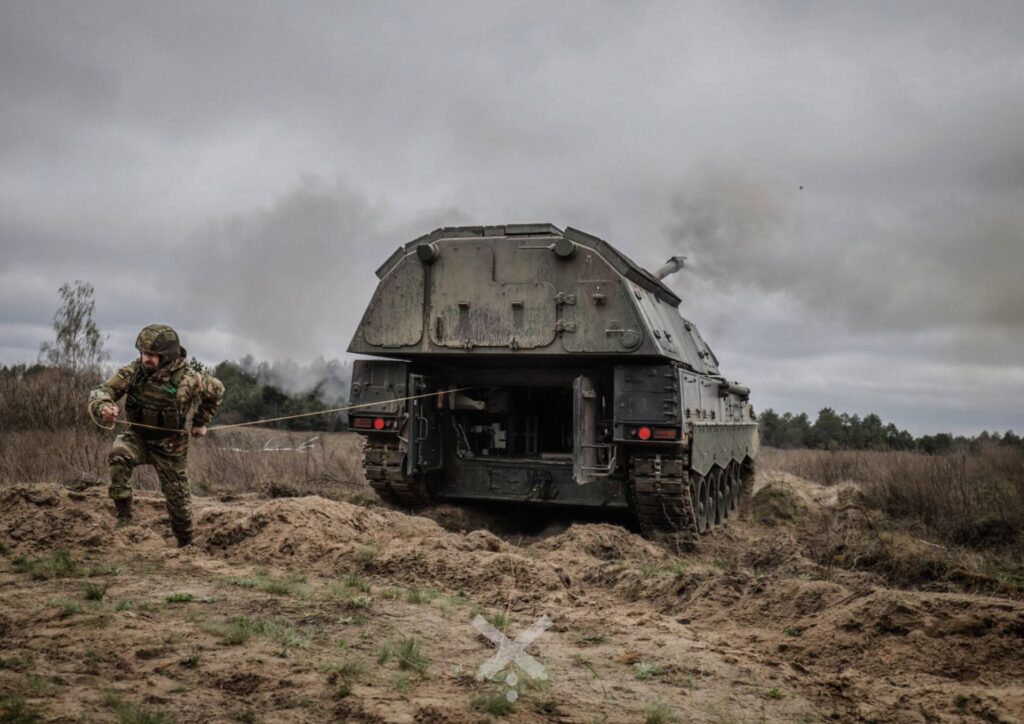
Feature Image: A Panzerhaubitze 2000 of the 43rd Artillery Brigade of the Armed Forces of Ukraine being fired. (Ukrainian Ground Forces Facebook)
Read more from Sandboxx News
- Vikings against Russians: Scandinavian and American commandos train to fight in the High North
- Navy wants its own AI-piloted drone fighters to put on aircraft carriers
- Wonder-weapons of World War II: The German viper and the American goblin
- Beretta unveiled its new rifle – and it’s already found a major customer
- What do the different prefixes of military aircraft mean?