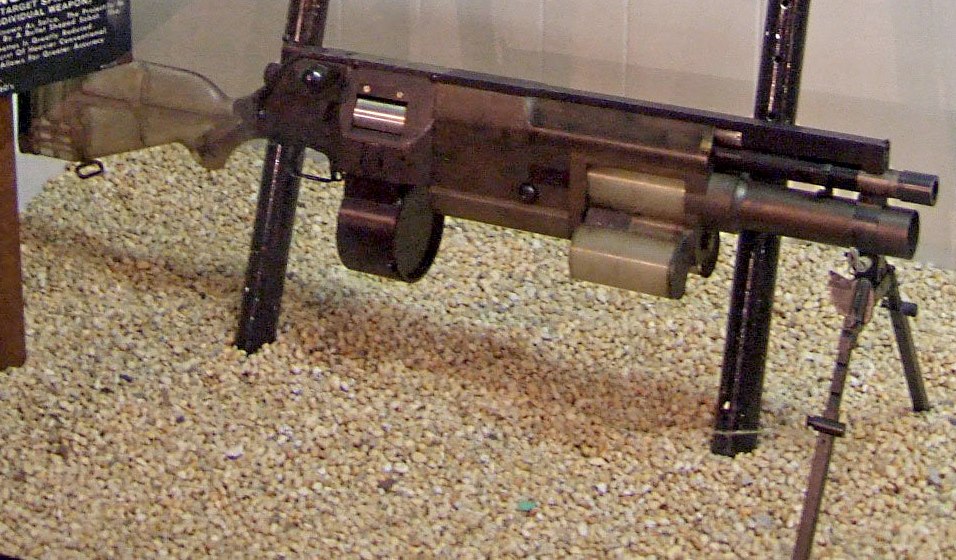
Many firearms have been produced to arm our military throughout the decades, which, although innovative, were simply not ready for prime time and died at the prototype stage.
Today, we will look at five weapons that were doomed, into what I call, the prototype graveyard.
The SPIW – Flechettes and folly
In the 1950s there was a trend to move to smaller calibers since they allowed for better rifle control, lighter and smaller weapons, and significantly lighter ammo that allowed soldiers to carry a lot more of it. The military finally settled on the M16, but along the way there appeared some other perplexing choices, and the SPIW program was one of those.
SPIW stands for Special Purpose Individual Weapon. It came to be from Project SALVO that found that a smaller weapon with a high rate of fire would be more beneficial than the full-power weapons of the time. The SPIW would be a flechette-firing rifle that came with an attached grenade launcher.
The SPIW isn’t a single weapon, but a variety of prototypes from AAI, Springfield Armory, Winchester, and Harrington and Richardson. Each had a way of firing multiple projectiles either at once or at an extremely high rate of fire. However, all of these weapons were either extremely heavy, or not very functional.
While the grenade launcher concept survived, the rest of the designs faded away and the program was discontinued.
The Colt SCAMP – The proto Personal Defense Weapon
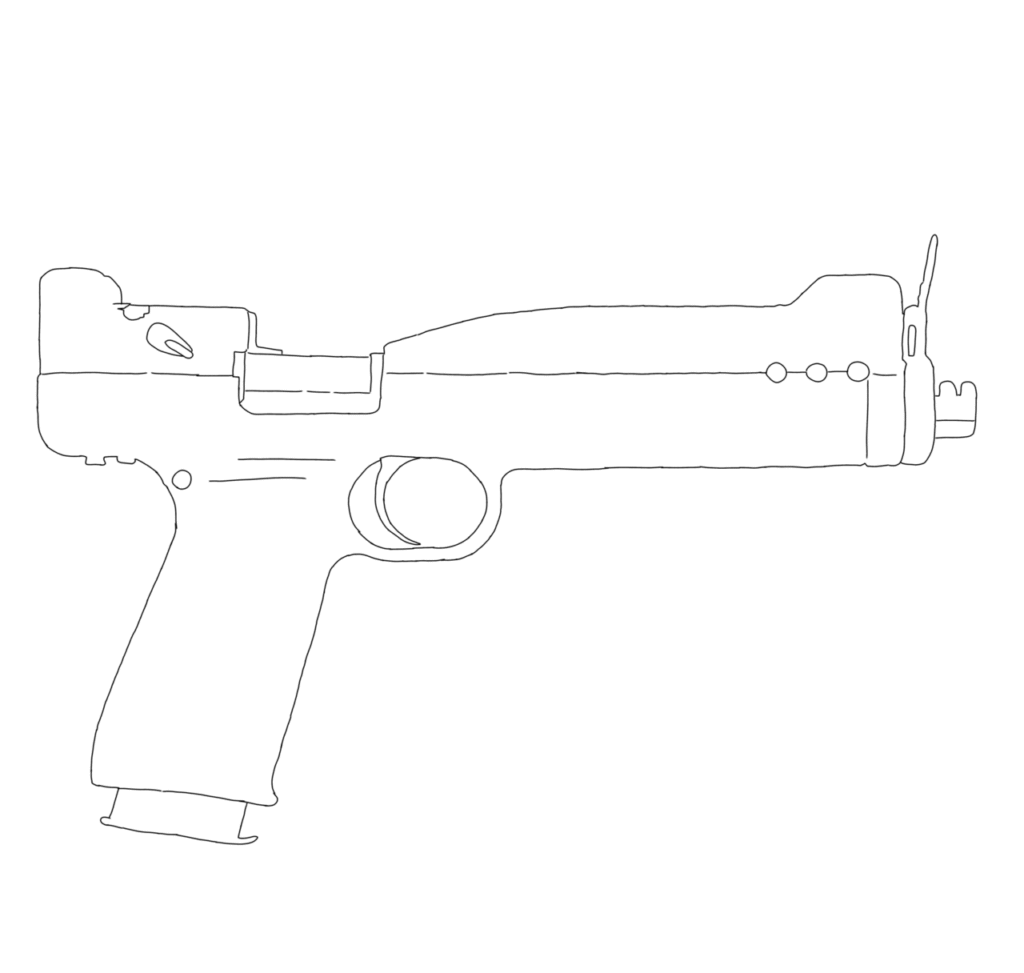
SCAMP (which is such a rad name for a gun) stands for Small Caliber Machine Pistol.
The idea behind the SCAMP was similar to that of modern personal defense weapons: it was intended to arm officers, vehicle crews, and personnel who weren’t on the front lines. These personnel were often issued the M1911, a .45 caliber handgun; and the SCAMP gave the troops increased firepower over the M1911 thanks to its select fire.
Machine pistols are famously difficult to control, so to make the SCAMP easy to use, it was chambered in a new cartridge called the .22 SCAMP which was a fast 5.56x29mm round.
The small round resulted in light recoil; further, an integrated compensator helped increase the pistol’s overall control. The smaller round also allowed for a magazine capacity of 27 rounds.
By all accounts the SCAMP was a controllable and easy to shoot weapon. What sent it to the graveyard was that the military simply wasn’t willing to part with the M1911 at that time. Handguns are very rarely used in combat, so the investment into a new platform and ammo wasn’t an attractive prospect.
HK G11 – Teutonic space magic
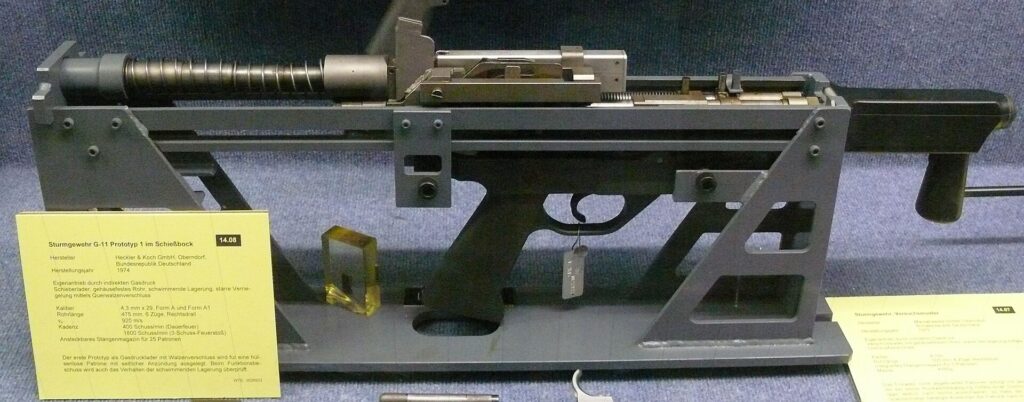
Germans are well known for their engineering, which is often fantastic and creative, but often overly complicated. The Heckler & Koch G11 reflects that in spades.
The G11 was one of the most futuristic rifles of all time – imagine a fancy Swiss watch turned into a rifle – and it premiered in 1990. HK targeted any NATO contract it could get, including in the United States.
The G11 used caseless ammo. Its ammo had various 4.73mm projectiles shoved into individual bricks or explosives that would act as the propellant. This reduced the weight of the ammo and its size allowing for 50 rounds to fit in a detachable magazine which laid across the top of the gun.
The weapon had a variable fire rate. On full auto it fired 460 rounds per minute, but in three shot burst it fired 2,100 rounds per minute. The high rate of fire helped ensure accuracy by firing all three round before the recoil impulse disturbed the shooter.
Nevertheless, the G11’s high rate of fire, novel ammo, and magazine placement called for an extremely complicated mechanism – and complicated mechanisms are hard to repair.
Additionally, the caseless ammo was delicate and the weapon had cook-off issues when it got a little too hot. It simply wasn’t ready for prime time and development was discontinued.
The HK XM8 – The tactical tuna
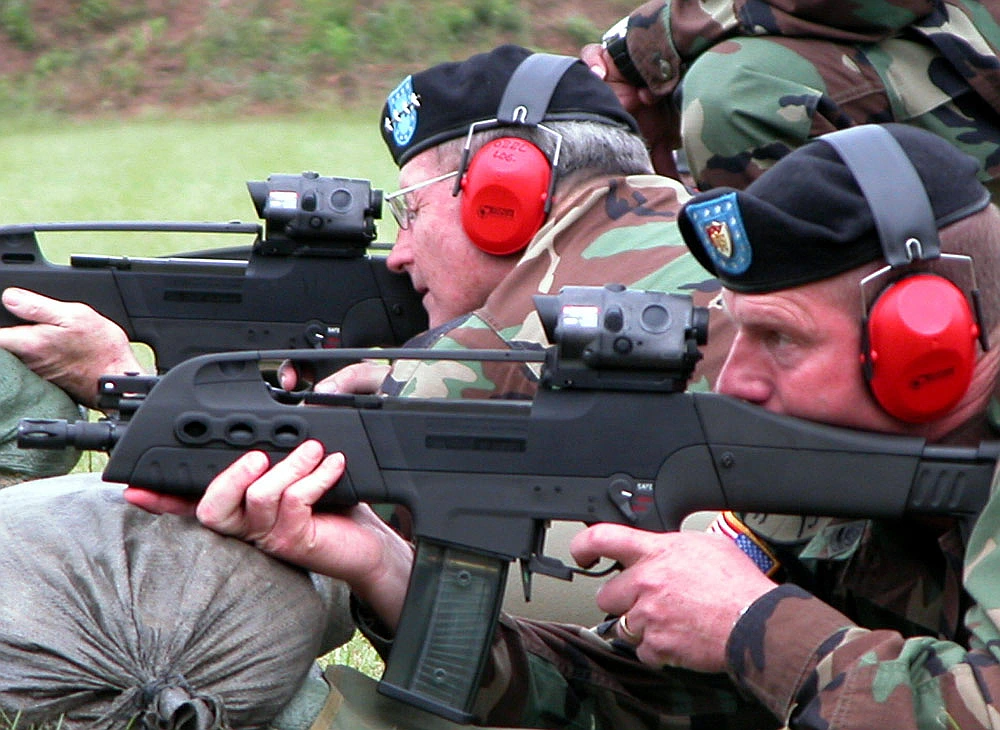
The XM8 was another attempt by Heckler & Koch to replace the M4 and M16 series of rifles used by the U.S. military.
The XM8 is a bit more traditional than the G11 we saw above. It was a 5.56 rifle utilizing a short-stroke, gas-piston system that was thought to be more reliable than the direct impingement system of the M4/M16. And indeed, in some regards the short-stroke gas-piston does work better, especially in sustained full auto fire.
The XM8 came with an integrated optic and modular accessory mounting system. HK used a substantial amount of polymer in the weapon’s construction. The weapon also featured a folding and collapsible stock,
HK looked to produce an entire family of arms around the XM8, including a rifle, carbine, designated marksman’s rifle, light machine gun, a compact carbine, and more.
The XM8 tested very favorably, but the increased costs of transitioning to a new rifle, retraining troops, and manufacturing proprietary parts made the weapon’s adoption an expensive proposition.
Ultimately, the XM8’s increased reliability over the M4 wasn’t enough to justify the cost of an entirely new platform.
The XM25 – The punisher
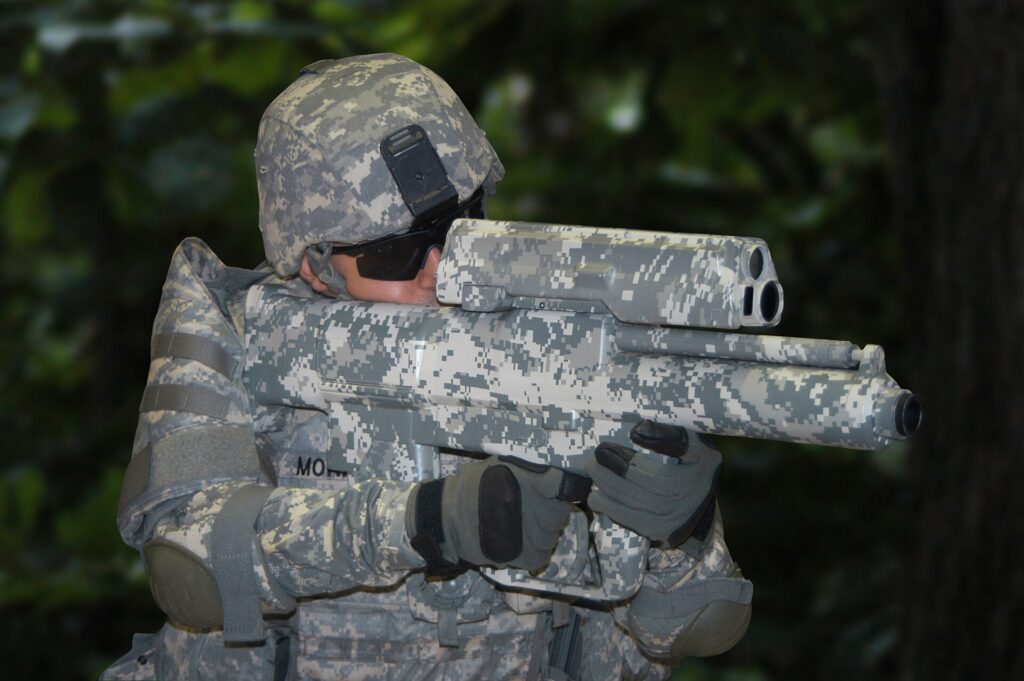
The XM25 was a standalone, direct-fire grenade launcher that fired 25mm airburst grenades. The XM25 Counter Defilade Target Engagement System, as was its full name, was semi-automatic, fired from a magazine and integrated smart weapon features, like a laser rangefinder and air-burst capability. In fact, it was the Army’s first “smart” shoulder-fired.
Its dual-warhead, airburst grenades allowed soldiers to detonate them as they flew past a target, effectively neutralizing most common sources of cover. As a result, the XM25 had more than double the effective range of the M203, in use by the military, and seemed like a promising design. The XM25 even made its way to Afghanistan where it helped take out an enemy machine gun nest.
The weapon, however, was very heavy. With 36 rounds of ammo weighed 35 pounds – that’s more than a medium machine gun. The ammunition was also extremely expensive and its production slow. Further, the platform had reliability issues and when dealing with explosive rounds that’s something you can’t afford. For all these reasons, the XM25 was eventually scrapped.
Nevertheless, the idea of a smart, direct-fire grenade launcher was not scrapped; instead, it continues with the FN MTL-30 and the Precision Grenadier program.
While most of the programs above might have ended up in the graveyard, they had some influence over weapons design. For example, the XM8 influenced the design of the G36. The Precision Grenadier program, which sprang from the XM25, still exists. The SCAMP project helped set the stage for the PDW program. And we took the undermounted grenade launcher from the SPIW and incorporated it in modern designs.
Feature Image: 5.56mm Point Target SPIW by Harrington and Richardson at the National Firearms Museum, 2007. (Photo by Joe Loong)
Read more from Sandboxx News
- How fighter pilots plan combat missions
- When Delta Force’s Blackfeet Indian chief had a very unique highway encounter
- Lockheed Martin and GE Aerospace announce successful testing of revolutionary jet engine
- British Royal Marines and Army Rangers qualify to provide NATO with special operations capability
- Second US Navy carrier strike group now heading towards Iran