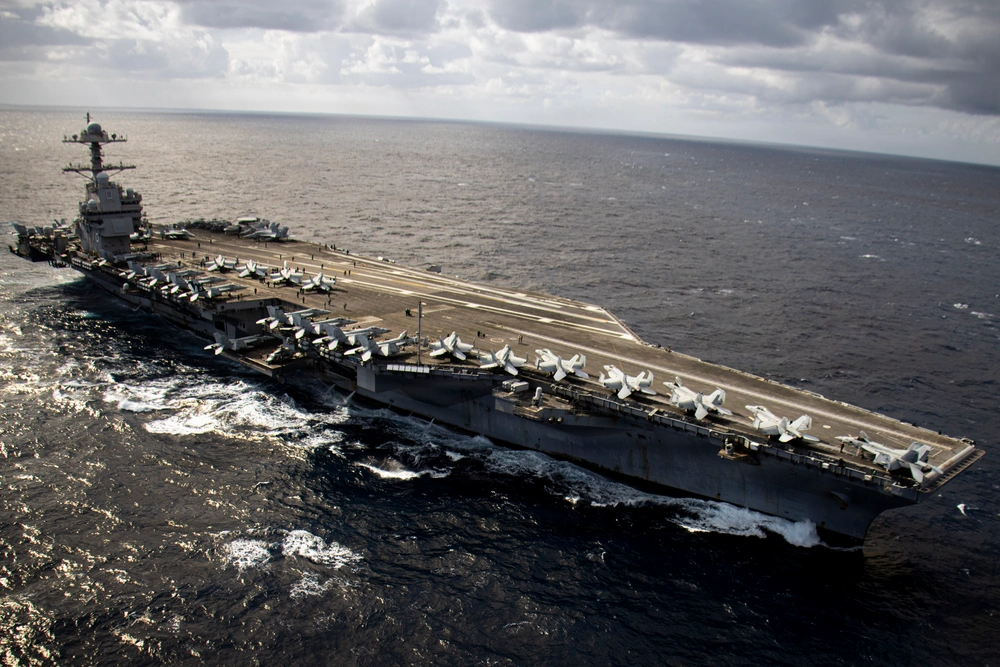
After breaking deployment-time records for the post-Vietnam era, the USS Gerald R. Ford aircraft carrier is again surging into operational service in the Red Sea, following a brief docking and repair period.
After supporting a successful “grab” of Venezuela’s Maduro, the USS Ford steamed to the Middle East to support Operation Epic Fury.
During this extended, exhausting deployment in support of U.S. military operations in multiple theaters, the USS Ford experienced an on-board “fire” and various maintenance, plumbing, and mechanical challenges.
While the ship has recently undergone extensive repairs, the massive supercarrier is again thrust into maritime combat as the U.S.-Iran conflict appears headed for a new phase of intensified warfare.
The circumstance naturally invites the question of how long the USS Ford can continue to endure extended deployment.
Prolonged deployment
From a mechanical standpoint, prolonged deployment accelerates fatigue across virtually every system onboard.
Aircraft launch and recovery equipment, propulsion systems, and even basic infrastructure like plumbing are all subject to constant use without the benefit of full maintenance periods. Reports have noted recurring issues, including persistent plumbing problems aboard the ship.
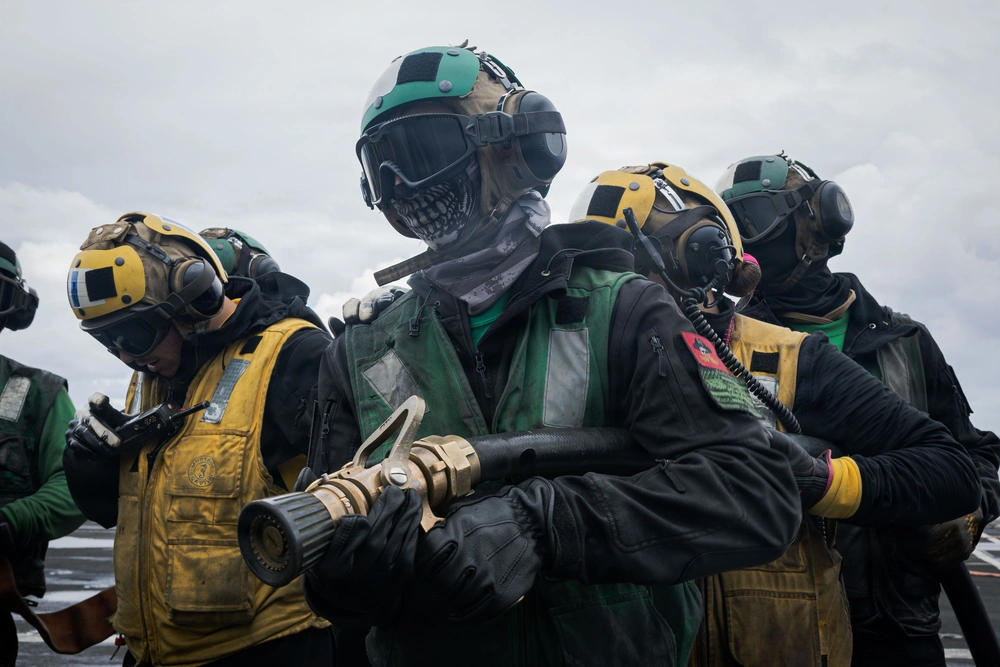
While none of these issues alone render the ship inoperable, together they form a picture of a platform under continuous stress. More dramatic incidents have reinforced this perception.
In March 2026, a fire broke out aboard the carrier, injuring sailors and damaging sections of the ship, including living spaces.
Though the Navy emphasized that the ship remained operational and its propulsion systems were unaffected, the event highlighted the risks inherent in keeping a complex vessel at sea for extended periods.
Fires at sea are among the most dangerous emergencies a crew can face, and even a contained incident leaves lasting effects – both physical damage and psychological strain.
That psychological strain is perhaps the most telling indicator of how “worn down” the Ford has become. Extended deployments disrupt not just maintenance schedules, but human lives. Sailors miss major life events, endure long stretches without meaningful rest, and operate in a high-tempo environment where mistakes can be deadly.
Navy leadership has acknowledged that pushing deployments beyond planned limits “disrupts lives” and complicates long-term readiness.
The Ford crew has now spent months operating across multiple theaters – from the Atlantic to the Caribbean to the Middle East – without the reset that a port return provides.
Related: A Marine’s guide to surviving deployment aboard a Navy ship
Not enough aircraft carriers
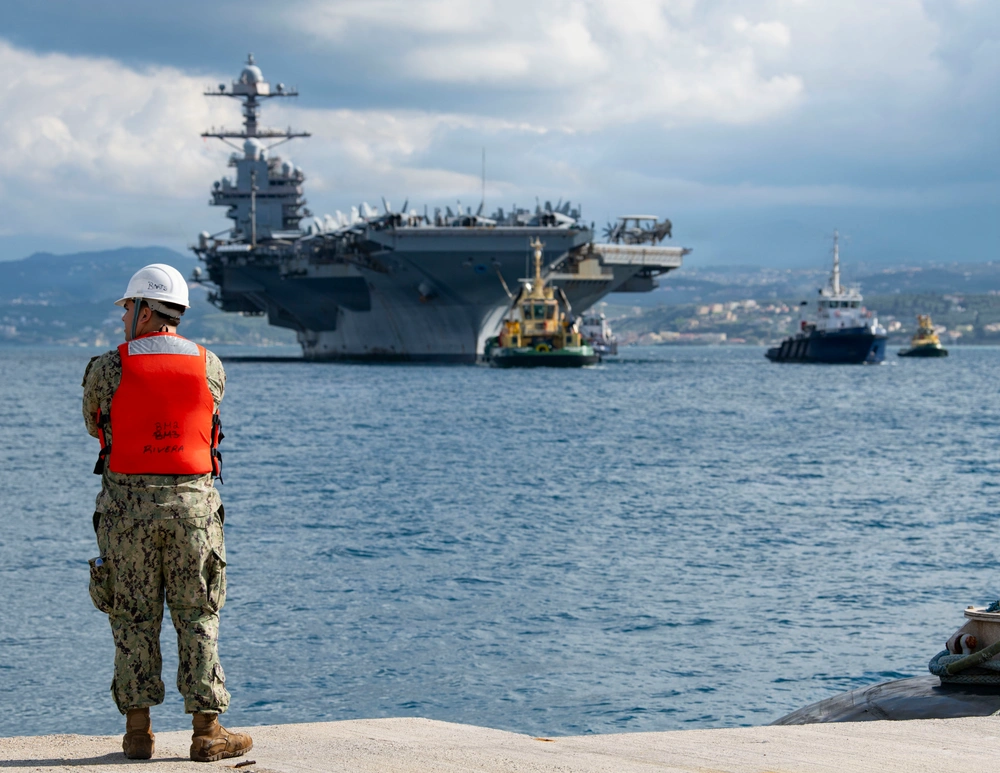
Strategically, this overextension reflects a broader issue within the U.S. Navy: a mismatch between global commitments and available resources. The Ford has been tasked with supporting multiple missions, including attacks against Iran, all while other carriers remain unavailable due to maintenance or readiness gaps.
As a result, the Ford has effectively become a “workhorse” asset, absorbing demands that might otherwise be distributed across a larger, fully available fleet.
This circumstance raises the question of the size of the U.S. Navy’s carrier fleet, suggesting that the Pentagon should add more carriers as quickly as possible.
So how long will the Ford be out of action once it returns?
While exact timelines have not been publicly confirmed, historical patterns provide a useful estimate.
After an extended deployment of this magnitude – especially one involving combat operations, system strain, and onboard incidents – the carrier will likely require several months at a minimum for maintenance and recovery. In some cases, maintenance periods for heavily used carriers can stretch well beyond six months, particularly if unexpected repairs are needed.
The USS Gerald R. Ford is worth It
Despite its setbacks, the famous USS Ford is arguably holding up quite well, as it incorporates advanced carrier technology.
The USS Gerald R. Ford experienced a long and heavily challenged developmental period years ago, a production effort plagued by delays, technical challenges, and cost overruns.
The USS Ford’s combat success reinforces the idea that perhaps the growing pains have ultimately proven worthwhile. Part of the cost overruns, developers explained as far back as 2013, were due to billions in non-recurring research and development costs necessary to support a “first-in-class” new kind of carrier.
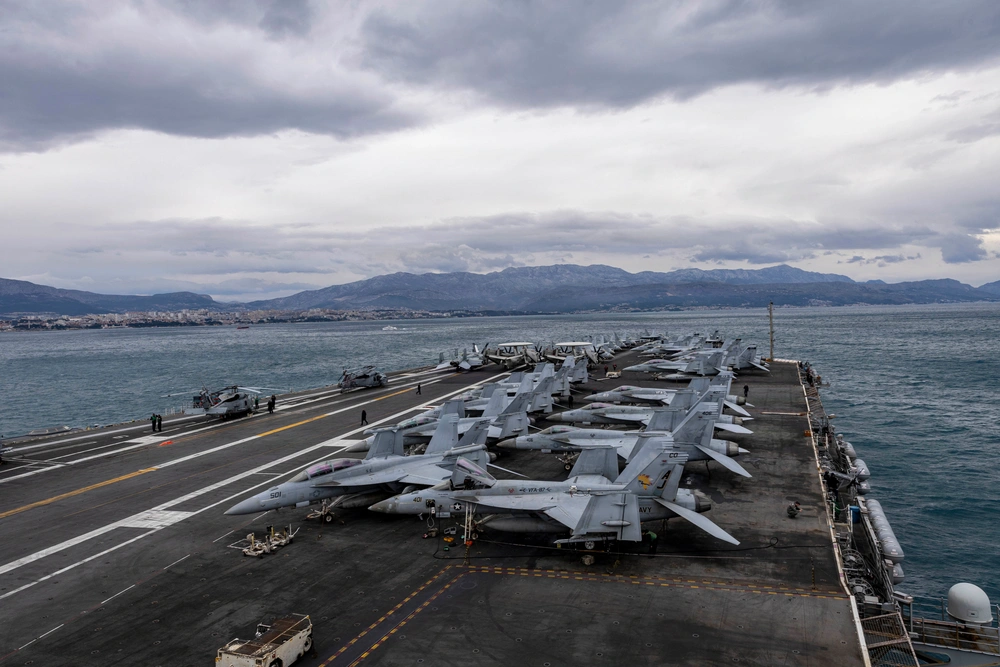
Much of the dollars expended in the development of the USS Ford were, by design, expected to help propel an entire new class of Ford carriers. The concept here is that, once developed, integrated, and operational, a new class of technologies would more seamlessly support a growing fleet of Ford-class carriers.
There was also a lesser-recognized long-term cost-control goal associated with the USS Ford’s development: the use of new computer-automation technologies throughout the ship for electronics, maintenance, measurements, and operations enabled the Ford-class carriers to successfully perform their missions with 900 fewer sailors on board.
This saves as much as $4 billion per ship throughout its entire lifespan, something that was largely overlooked 10-to-12 years ago when USS Ford development was under heavy scrutiny.
The technological struggles were significant as well, as the now-famous Electro-Magnetic Launch System (EMALS) struggled en route to becoming a first-of-its-kind “smoother,” more “steady” carrier-deck electromagnetic takeoff capability, which caused much less wear and tear on jet airframes compared to a traditional steam catapult.
The electric weapons elevators also encountered developmental glitches, yet their successful operation enabled much faster, more efficient carrier rearm and refuel operations.
This increases sortie rate, lethality, and a commensurate ability to project power as needed.
Editor’s Note: This article by Kris Osborn was originally published by 19fortyfive.com.
Feature Image: The world’s largest aircraft carrier, USS Gerald R. Ford (CVN 78), transits the Eastern Mediterranean Sea, March 22, 2026. Gerald R. Ford is on a scheduled deployment in the U.S. 6th Fleet area of operations to support the warfighting effectiveness, lethality and readiness of U.S. Naval Forces Europe Africa, and defend U.S., Allied and partner interests in the region. (U.S. Navy photo by Petty Officer 2nd Class Tajh Payne)
Read more from Sandboxx News
- Navy successfully tests JDAM version that turns the famous weapon into a long-range missile
- JPMorganChase positions itself as a prime financial player in America’s defense rebuild
- Will the B-21 Raider’s production run suffer the same fate as its predecessor’s?
- Delta Force’s ‘Bailey Blaster Door Charge’ blasted down more than its intended target
- ARC Raiders is a third-person shooter well-worth of your time