June, 1944, D-Day, was a massive success. A multinational force of Allied troops has landed in France. After the initial invasion succeeded, a lull in the fight has given your unit time to process Prisoners of War. You’re a young NCO, maybe only an E-3, trying to get the job done and get to chow. As you process POWs you realize they aren’t all Germans.
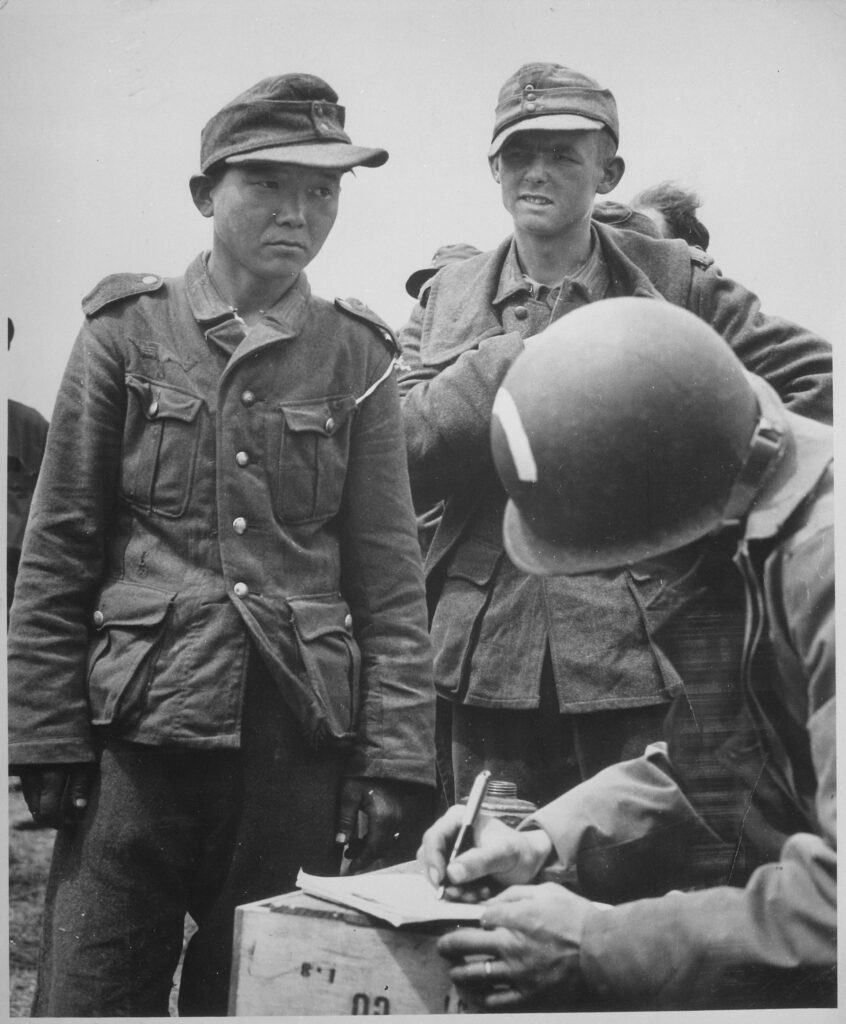
You see Polish, Czechs, Georgians, and more. Conscripts forced to fight by the Germans. Then you come across a man who is distinctly different from the Europeans. He’s Asian, Korean specifically, one of only four Koreans at D-Day wearing Wehrmacht uniforms.
His name is Yang Kyoungjong. Then you hear his story…
From Korea to the Kwantung Army
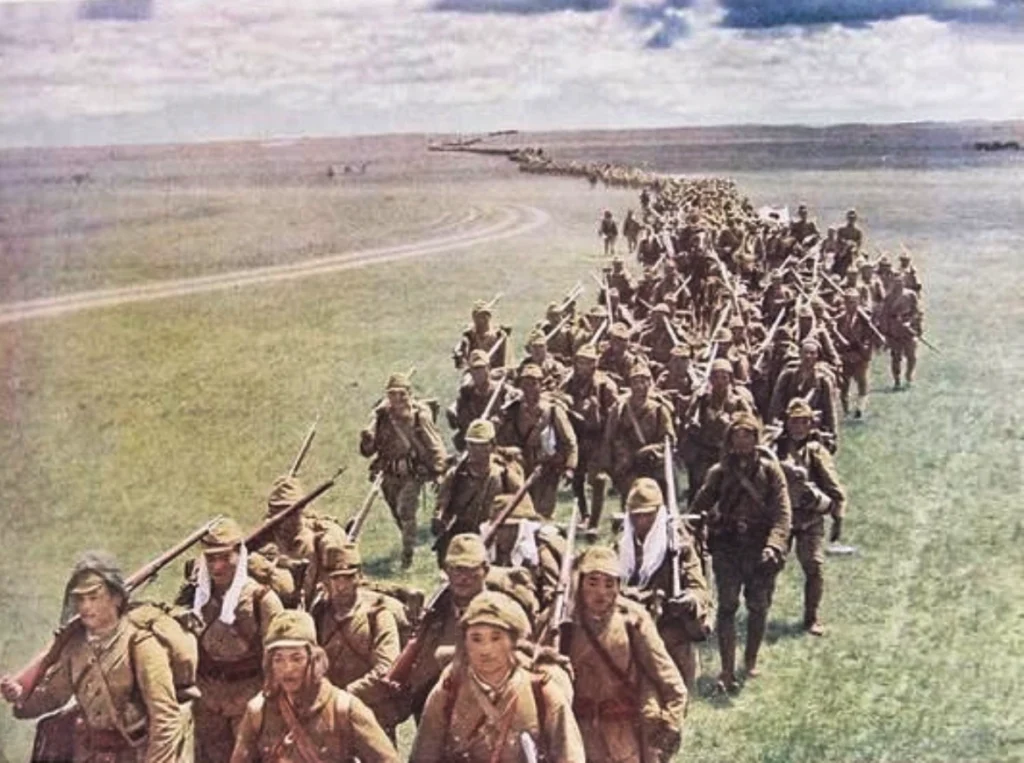
In 1938 Korea is under Japanese occupation. The Japanese and Soviets are fighting a border war, and young Yang Kyoungjong is conscripted to fight for the Kwantung Army, the Japanese force stationed in Manchuria. The battles against the Soviets are brutal: armored vehicles, machine guns, and other horrors Yang had never seen, are being used.
He’s captured by the Red Army, possibly at the Battle of Khalkhin Gol. The Japanese were outnumbered and cut off, but they gave the Soviets a helluva fight. Ultimately, they were encircled by Soviet armor and suffered quiet the loss. Yang Kyoungjong was captured, taken to a labor camp an essentially made into a slave for the Soviet Union.
Since he was Korean, the Japanese weren’t concerned about him, or the three other Koreans he was conscripted with. For Yang, his fate seems to be to die in some gulag far from home under forced labor conditions.
The Nazis Invade
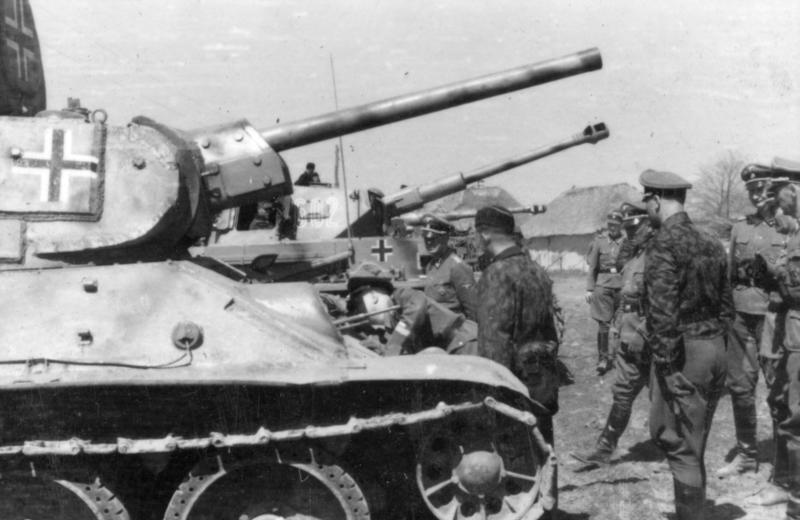
By 1942, the Soviets are still reeling from the Nazi Invasion. Peace deals they had brokered with the Germans were broken, and now the Soviets need every man they can get, so they start emptying the gulags. Yang Kyoungjong is once more conscripted into battle.
This time he’s wearing a Soviet uniform, carrying a Soviet rifle, and fighting German forces. I imagine between bouts of fear and rage Yang had to recognize the absurdity of the situation. It’s doubtful he was given any sort of choice, but fighting in the Red Army was likely better than expiring in a Siberian prison camp.
Yang goes to Ukraine and fights in the Third Battle of Kharkov. He’s either extremely lucky or unlucky – you’ll have to decide that for yourself – as this is the second meat grinder he participates in. The Soviets deploy 210,000 men, to fight 130,000 Germans. Initial Red Army advances are short-lived and the Soviet advantage collapses.
By the end of that snowy bloodbath of a battle, the Soviets had suffered nearly 90,000 casualties, whereas the Germans lost a little more than 11,000. Yang is once more captured, this time by the German military.
Related: Wonder-weapons of World War 2: The German viper and the American goblin
The Ost-bataillone
The German military wasn’t one to waste supplies, and they counted POWs as such. So they formed battalions made up of Soviet troops. These soldiers were essentially given the option to either volunteer to fight or you starve to death. So, Yang Kyoungjong put on a third uniform, for a third country he was not a citizen of.
These units were stationed outside the Soviet Union to prevent deflections or betrayals. For Yang, that meant going to France to man the Atlantic Wall and defend the coast.
After D-Day, Yang was once again captured, but this time, the capturing force doesn’t make him put on another uniform. Instead, he’s processed as a POW and sent to America where he reportedly lives the rest of his life in peace – a much deserved one.
The thing is…
The story sounds absolutely fantastic and it’s surprising it hasn’t been turned it into a movie yet. There might be good reason for that though: Yang Kyoungjong might have never existed despite numerous historical authors mentioning him.
It seems true that there were Asian men in Wehrmacht uniforms during D-Day. A photo taken of an Asian prisoner of war in a Wehrmacht uniform from Normandy exists in the National Archives, but simply identifies him as a “young Japanese.”
Most of the story of Yang Kyoungjong seems to be taken from the Stephen Ambrose book D-Day, June 6, 1944: The Climactic Battle of World War II. Ambrose interviewed Colonel Robert Brewer who recounted a story of four Korean soldiers in the Wehrmacht who were conscripted into the Japanese military, then the Soviet Army, and finally the Wehrmacht.
There was no mention specifically of Yang Kyoungjong, but if we were to believe Colonel Brewer, and there’s no reason not to, at least four Korean men went on a similar journey. And their fates likely saw them return to Korea.
Although we have no concrete evidence that Yang Kyoungjong existed, at least four Korean men went on an extraordinary journey and ended up in the Wehrmacht – could they also potentially have fought in the Korean War afterwards?
They would have quite the story to tell, but unfortunately we won’t know it or their names.
Feature Image: Infantryman of the Kwantung Army’s IJA 23rd Division marching in the Mongolian Steppe during Battles of Khalkhyn Gol, July 1939. During this campaign the 23rd Division suffered a total of 11,958 men killed, or about 80% of its combat strength. Notably, the only divisional sub-unit not suffering a crippling casualties was the reconnaissance regiment, which was able to break a Soviet encirclement. (Wikimedia Commons)
Read more from Sandboxx News
- These elite Marines combine tradition with special operations innovations
- Maven AI, which is revolutionizing how the US military engages targets, is already in use against Iran
- What happens when a Delta operator collects too much equipment
- Footage shows F/A-18 Super Hornet narrowly avoid missile over Iran
- Artemis II is headed to the Moon. This is how the military is helping