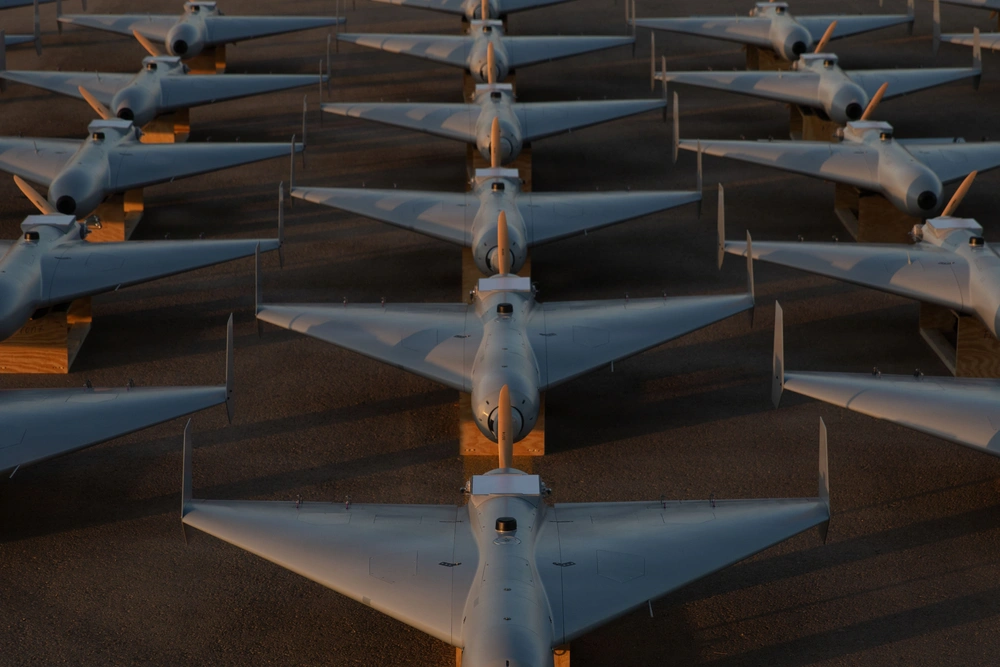
As combat operations in Iran continue, with the operational advent of the Low-cost Uncrewed (Unmanned) Combat Attack System, better known as the LUCAS, the United States has officially joined the short list of countries known to have employed kamikaze drones on the battlefield. The announcement about the drone’s use from U.S. Central Command marks the culmination of an incredibly rapid ascension from development to service for a new weapon called the.
LUCAS drones were reverse-engineered from recovered Iranian Shahed-136 kamikaze drones by an Arizona-based firm called SpektreWorks. Nevertheless, America’s newest offensive weapon began as a target surrogate meant to emulate the basic shape and performance of Shahed-style drones for American troops to practice shooting down. It didn’t take long, however, for Pentagon officials to recognize that these even cheaper copies of the Shahed-136 could actually offer a pretty cheap and potent offensive weapon system. This kicked off a roughly 12-month whirlwind of development and testing that resulted in the LUCAS drone becoming the first platform employed by the U.S. Central Command’s Task Force Scorpion Strike (TFSS).
Task Force Scorpion Strike is a relatively small unit made up of only about two dozen troops that fall under U.S. Special Operations Command Central, or the special operations command element that oversees Middle East operations. This group was established in December 2025 with the expressed purpose of rapidly developing and fielding low-cost drone combat capabilities for American forces.
The LUCAS can deliver 40 pounds of high-explosive payloads over hundreds of miles at a reported cost of just $35,000 per drone, or about half the price of the most inexpensive Hellfire missile iterations in service today, which offer a range of only around seven miles. Higher-end cruise missiles that offer similar range to the LUCAS, like the AGM-158 JASSM-ER, can cost upwards of 36 times more.
The idea behind the LUCAS is to create a “saturation attack,” which means inundating local air defenses with so many inbound targets at once that it overwhelms their ability to respond, either by depleting local interceptor inventories or so overwhelming command and control that they can’t target all of the incoming drones.
In fact, depending on its intended target and circumstances, a $35,000 LUCAS drone might be more valuable as a target that wastes a $1.3 million 48N6 interceptor launched from an S-300 than it might be as a weapon.
Additionally, the LUCAS drone’s modular design could allow for more expensive components to be shoehorned in, like intelligence, surveillance, and reconnaissance (ISR) suites or potentially even electronic warfare payloads, but the real advantage of LUCAS and similar systems isn’t in what you can cram into them, but rather how many you can rapidly produce.
Further, unlike other high-end American weapon systems, this drone isn’t about advanced technology at all. Instead, they leverage low-cost systems and simple designs meant for easy and scalable production.
Production capacity is, to some extent, a measure of cost and complexity. The cost of the components that make up a platform is the most commonly discussed barrier to high production volume because it’s the most direct. But for a wealthy nation like the United States, complexity is just as important a consideration. A difficult, time-consuming, and labor-intensive manufacturing process can just as easily limit production volume. However, the LUCAS is both inexpensive and relatively simple to produce, making it possible to rapidly scale production, when a surge of weapon capacity is needed, over a relatively short period of time.
Read more from Sandboxx News
- Raytheon to increase production of its SM-6 all-purpose interceptor missile by 300%
- German military goes against tradition and chooses a non-German weapon as its new handgun
- US embraces ‘Shanzhai’ with copycat Iranian drone
- American submarine sinks Iranian frigate and achieves Navy’s first torpedo kill since WWII
- F-35 gets its first ever air-to-air kill against a manned aircraft