The common joke regarding warfare logistics is that it comes down to bullets, beans, and bandages. But in a near-peer conflict, traditional supply methods will become easy targets to drones, MANPADs, and other assets.
So, the U.S. military is innovating in how it delivers and prepares food for troops on the front line by testing several new technologies.
An autonomous chow hall
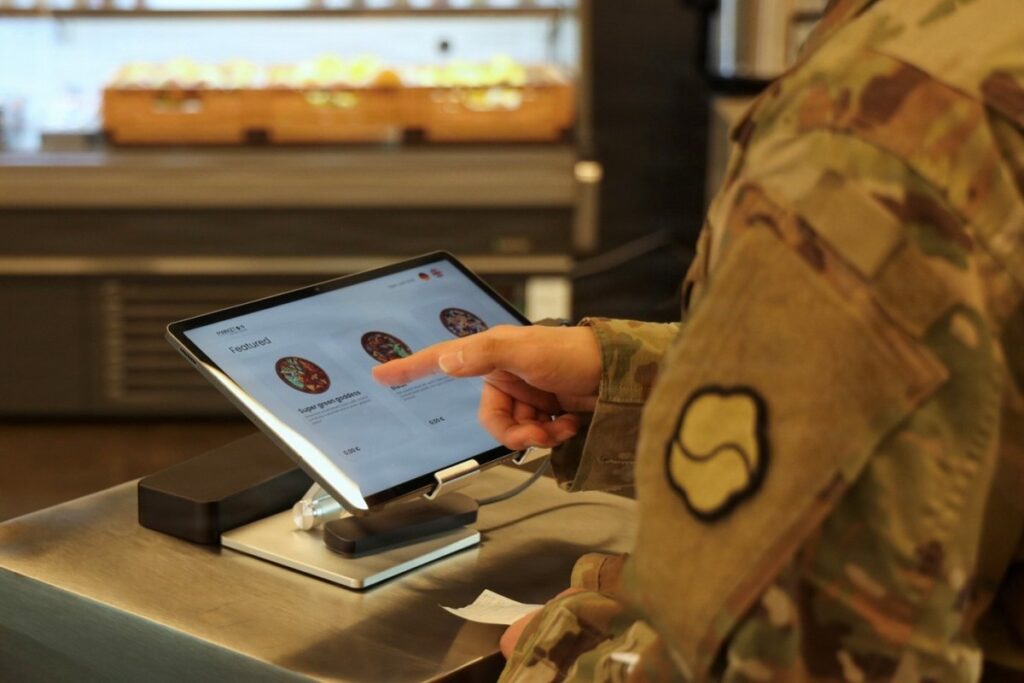
In November 2025, at Camp Walker in South Korea, the Army unveiled Market 19, an autonomous dining facility that aims to bring robotics to the forefront when it comes to feeding troops.
The purpose of Market 19 is to make the process of preparing and serving food to Soldiers quicker and more efficient, and, as a result, free up Soldiers for field tasks.
The autonomous kitchen uses programmed robots to cook food using fresh ingredients – which Soldiers choose from a tablet – from a preprogrammed selection. Soldiers oversee Market 19 to ensure food safety and quality control, yet overall less troops are needed to man the chow hall.
The big benefit of this system is its ability to supplement dining operations. Market 19 is currently in an experimental phase, but could be the future of chow halls.
Food-delivering sea drones
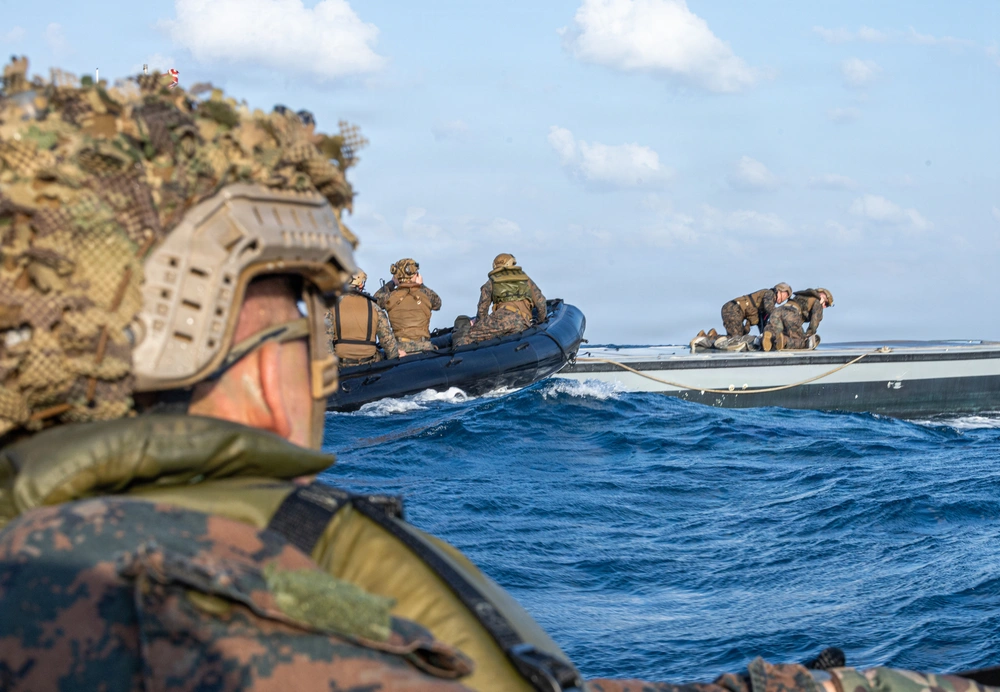
A revived focus on island warfare and on countering China in littoral waters comes with ensuring supply routes in such areas. Traditional resupply efforts will be challenged and getting Navy ships close enough to supply troops on littoral areas could prove extremely hazardous.
To counter this the Marine Corps and Navy have been developing the ALPV, or Autonomous Low-Profile Vessel, a sea-based drone designed for logistics.
This system can transport food, water, fuel, ammo, and more into littoral areas.
ALPV is partially submerged, floating just a few inches above the sea to limit its visibility. It has a range of up to 2,200 nautical miles and can carry up to five tons of supplies.
The assault kitchen
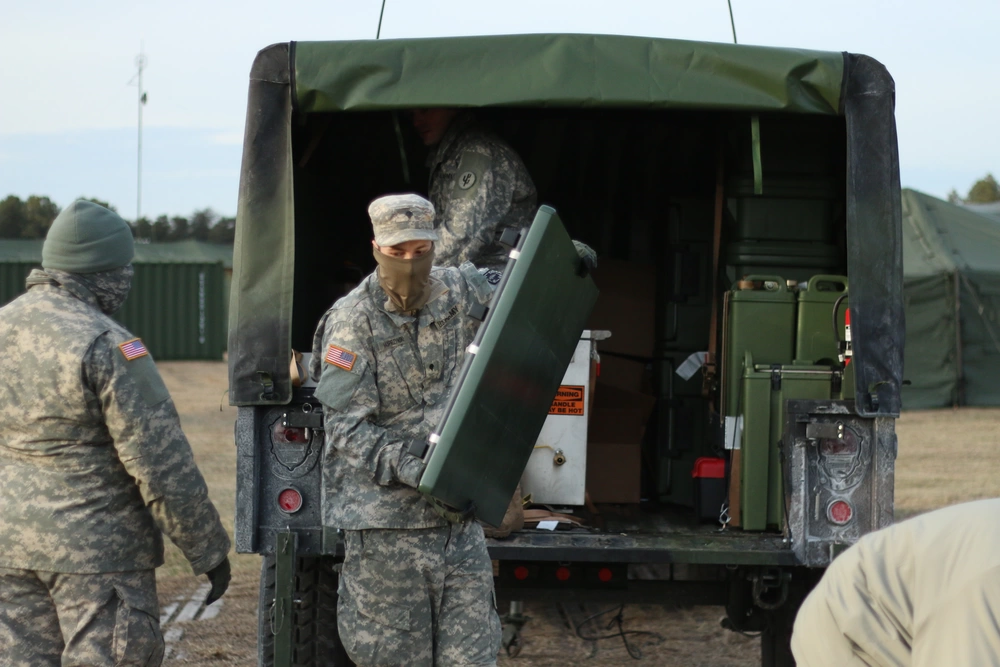
The EFFES, or Expeditionary Field Feeding Equipment System, is the Army’s solution to keeping troops fed on the front lines. The EFFES is a traditional kitchen packed into a small, self-sustained unit. The system, which resembles a mini-jet, is designed to operate in a variety of environments, including the Arctic.
A single EFFES can feed up to 150 troops and be easily transported by air, land or sea.
This highly mobile design has no external power source and is entirely self-sustained. It uses thermorelectrics, whereby a temperature difference creates an electric current to power automatic fuel pumps. The system uses super efficient stoves that triple heat output and uses 80% less fuel that previous field stoves.
The kitchen in a box is the future of keeping troops fed and ready on the front lines.
Related: Fuel for the Fight: Mastering the Nutritional Domain Before Basic Training
Food from space
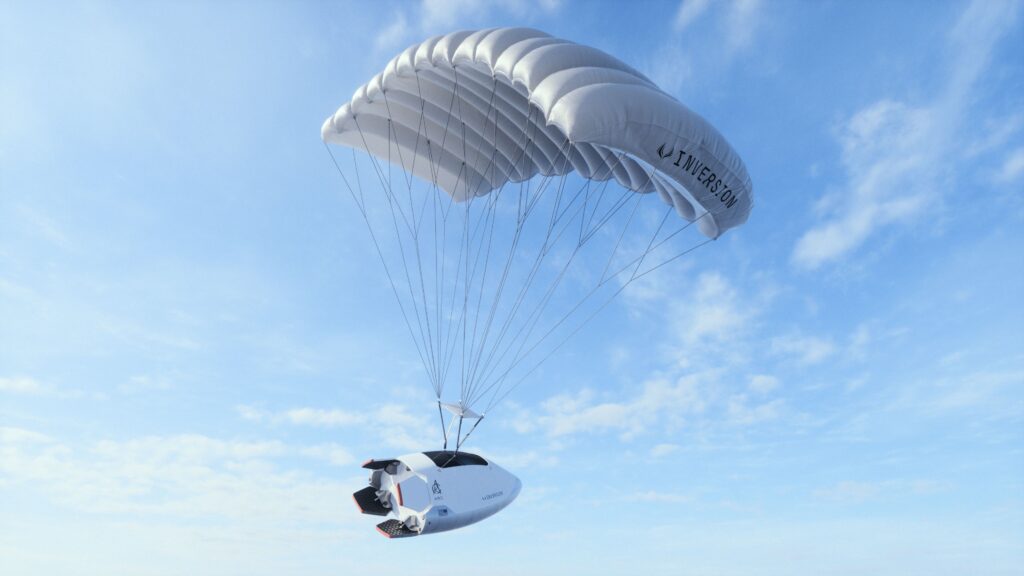
The Space Force is working on a program to deliver supplies to anywhere on Earth in about an hour.
Imagine a special ops team imbedded with local forces, far behind enemy lines with traditional supply lines cut-off. How do you feed those troops? The Space Force’s Arc Orbital Supply Capsule could do it.
The idea is for the arc to packed with supplies and then launched into low Earth orbit where it will remains until it’s called upon to deliver cargo to warfighters. To reenter the atmosphere, the arc will use a parachute to ensure a soft landing when its over the designated landing zone. Inversion, the company behind the system, says that the arc will be able to deliver supplies anywhere within an hour.
A drone waiter for Marines
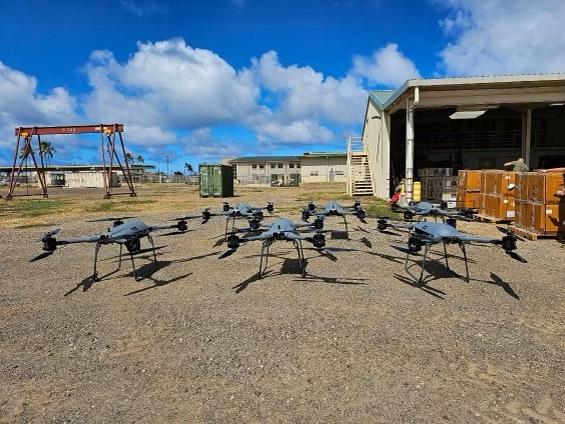
Distribution of food can also be hazardous and difficult, as troops are often required to disengage from the front line to get to their supplies. That’s the problem that Marine Corps aims to address with the TRUAS, or Tactical Resupply Unmanned System.
Think of TRUAS as a drone waiter that delivers your beans, bullets, and bandages. The drone has a range of nine miles and is capable of carrying up to 150 pounds of supplies.
The system is completely automated and doesn’t need a dedicated pilot to control it. Instead, it uses waypoint navigation to reach the target area. Give it a drop point and it brings the food to you, just don’t forget to tip!
It’s easy to wrapped up in new weapon systems, but, at the end of the day, the users employing those tools need to get fed. And the military is ensuring – through the help of different, high-tech ways –that servicemembers on the ground can keep the fight up with full bellies. After all, tactics win battles but logistics win wars.
Feature Image: Inside Market 19 a Soldier orders a meal on Camp Walker, South Korea, Nov. 7, 2025. (Photo by Republic of Korea Army Sgt. Minho Lee)
Read more from Sandboxx News
- The military’s drone-defense confusion is leaving its bases vulnerable, Pentagon watchdog finds
- Lockheed Martin delivered record number of F-35s in 2025
- Air Force uses MH-139 Grey Wolf helicopters for the first time to protect nukes
- SEALs and other Navy combat personnel face new annual fitness requirements
- Inside the office defending Marine Corps emblems and slogans from AI knockoffs, profiteers