The war in Ukraine entered its fifth year. On February 24, 2022, Russian President Vladimir Putin took the fateful decision to invade its neighbor en masse. However, Russian troops had been in Ukraine, occupying and even annexing territory, since 2014.
Four years after the 2022 large-scale invasion, Putin’s decision has proven to be a strategic miscalculation with deep ramifications for Russia’s military capabilities. The Russian armed forces have lost their core professional cadre of troops. Moreover, Russia’s special operations capability has suffered a significant blow from which it will take years to recover. Finally, the high casualty rates of the Russian military are encouraging an attritional strategy that only begets more losses.
The annihilation of Russia’s professional military force
The initial Russian invasion force numbered approximately 190,000 active duty and reserve troops. It included some of Russia’s most elite units, including paratroopers, marine infantry, and Guards mechanized formations.
Elite units, including the VDV airborne forces and marine infantry, have suffered catastrophic losses. On the first day of the conflict, VDV paratroopers attempted to capture the Hostomel airport located near Kyiv. Although the initial air assault managed to establish a foothold on the airport, the Ukrainian forces counterattacked and liberated it, wiping out the VDV force. Russia’s airborne forces suffered subsequent heavy losses in a series of battles around Kyiv.
As a result of these losses, the Russian military does not have a capable airborne capability right now. The same situation can be found in the ranks of Russia’s marine infantry and Guards mechanized formations.
A special operation issue
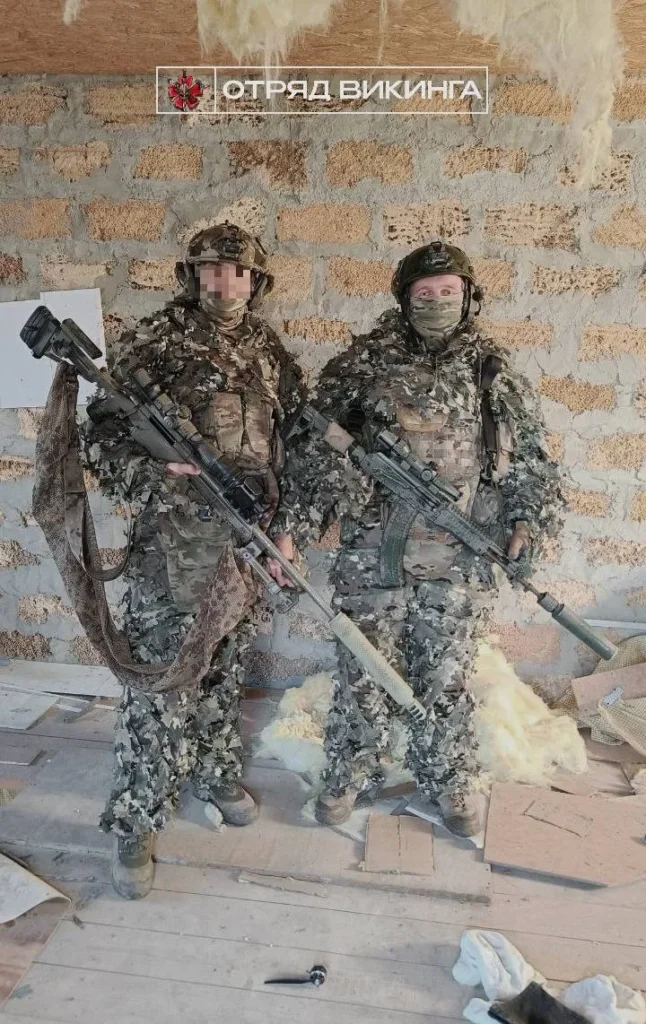
The Russian special operations forces have also suffered significant attrition in the conflict.
Russia has a large special operations community across the armed forces and intelligence services, including GRU, the military intelligence agency, the FSB, the domestic intelligence agency, and the SVR, the foreign intelligence agency.
Spetsnaz units across these agencies have suffered heavy losses in the war, sometimes even forced to fight in an infantry role. One of the cardinal “SOF Truths” is that special operations forces cannot be mass-produced. Thus, it will take several years before the Russian military can reconstitute its special operations capability, something that can cause significant strategic ramifications.
Related: How US Special Forces took on Wagner Group mercenaries in an intense 4-hour battle
An attritional loop
The Russian military, paramilitary units, and pro-Russian forces have taken nearly 1.3 million casualties killed and wounded since the start of the large-scale invasion.
In many ways, the lack of well-trained troops due to the very high casualty rates is causing more casualties to the Russian forces.
“Most personnel currently serving in the Russian military have received minimal training, forcing Russian commanders to use basic tactics to make advances, despite the associated high casualty rates,” the British Military Intelligence assessed in a recent estimate on the conflict.
Nevertheless, the Russian military is trying to adapt to the situation and even fight a semblance of maneuver warfare.
“Russian forces have adapted their tactics with greater use of lightweight vehicles, uncrewed aerial systems and infiltration groups, which has enabled the bypassing of Ukrainian defensive positions as well as disrupting Ukrainian logistics,” the British Military Intelligence added.
The need to apply constant pressure on the Ukrainian forces across the frontline and hinder Kyiv from rebuilding its forces to launch a counteroffensive prevents the Russian military itself from rebuilding its own conventional forces.
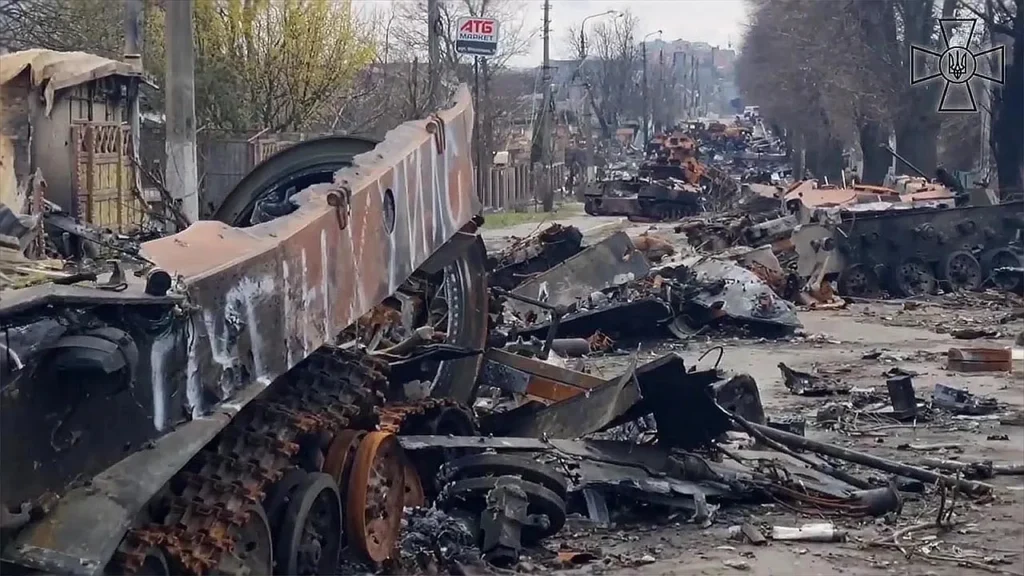
Feature Image: Russian military column that was destroyed in Bucha near Kyiv on 27 February 2022. (Ukriform TV via Armed Forces of Ukraine)
Read more from Sandboxx News
- DARPA and SOCOM unveil X-76, their newest X-Plane designed to transport operators much faster than before
- A tactical victory on the field does not mean victory against Iran
- What is America’s Tanker Security Program that saw one of its ships getting hit by Iran?
- The Marine Corps is keeping the M27 rifle – and that’s a good thing
- The LUCAS drone is a needed addition to America’s arsenal despite its modest capabilities