Two dozen airmen training to operate the military’s oldest active bomber are getting something extra: the kind of brain- and body-conditioning program typically reserved for elite athletes and special operators.
The project is called the Comprehensive Readiness for Aircrew Flying Training program, or CRAFT, and it’s designed to get the best-possible human performance out of B-52 Stratofortress crews who may find themselves on 30-hour bomber missions where alertness and clear decision-making are of the essence. The program, which kicked off this month, is part of a two-year test project authorized by Air Force Global Strike Command in February 2022 to evaluate the criteria that will “ensure we’re beginning the highest levels of performance enhancement to our force,” Lt. Col. Kris Ostrowski, project director for CRAFT, told Sandboxx News.
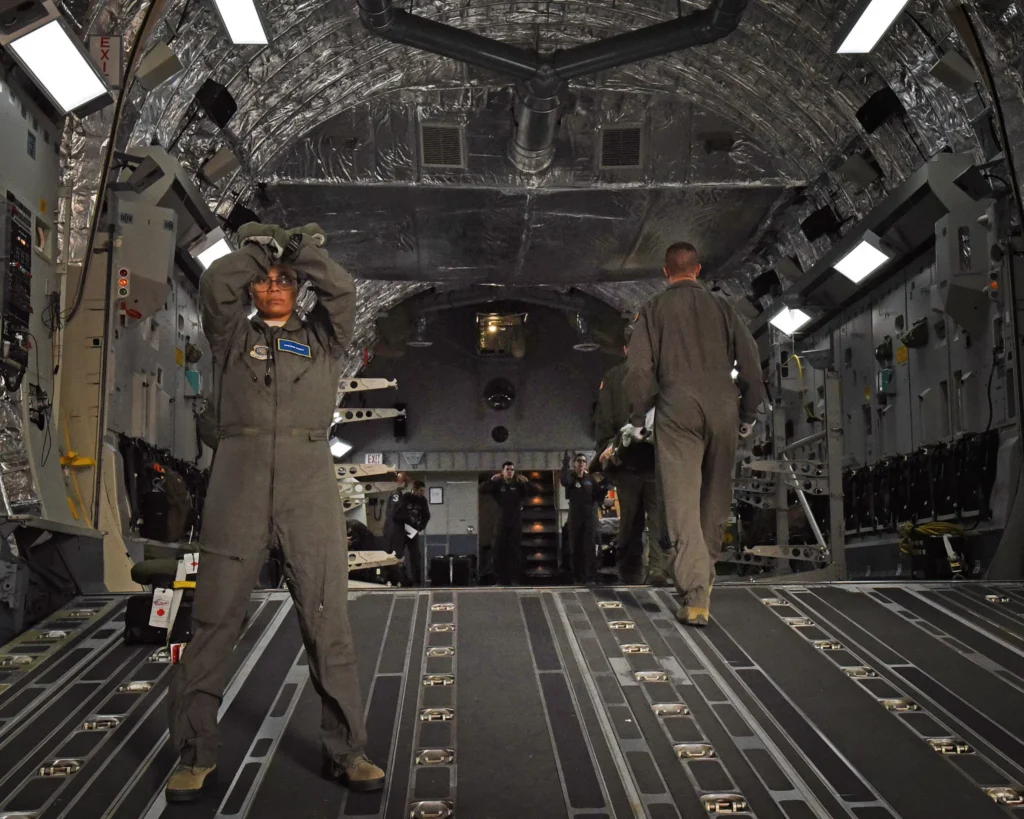
They decided to begin on a small scale with a small group of B-52 initial qualification training students, reasoning that those airmen represented the “first touch point” that Air Force Global Strike Command has with the airframe’s future operators. In addition to their conventional academic training in the B-52 Formal Training Unit (FTU) class, these students are receiving three weekly 75-minute sessions with a strength and conditioning coach to ensure their bodies are at peak performance; an additional 60 minutes per week of “cognitive training” focused on improving focus and putting the students in charge of their mindset and outlook; and individualized consultations on high-performance nutrition, said Dr. Johannes Raabe, CRAFT’s chief scientist.
Related: The B-52 was designed in a hotel room over one weekend (and will probably fly for 100 years)
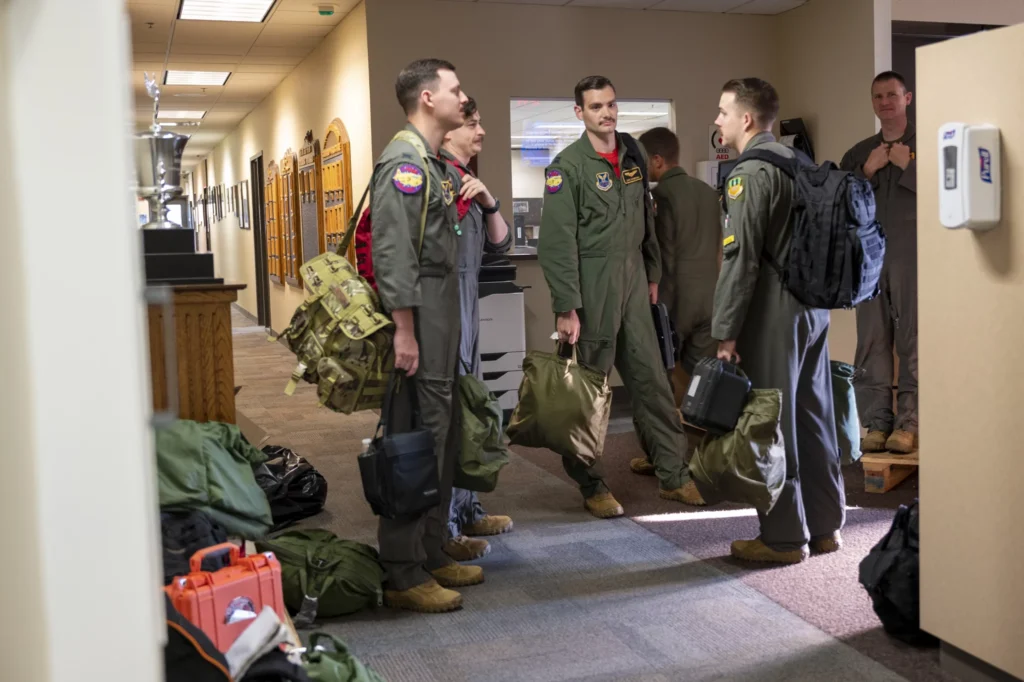
“What’s really happening is that throughout their time in the FTU, the students are receiving learning and training opportunities in all three of those domains,” Raabe said.
The first half of the FTU program is focused on “academic,” or classroom, learning. The classes and training will give them the tools to fine-tune their performance and responses, according to Raabe. During the second half of the course known as “flightline” the students will have a chance to practice what they’ve learned in the real world.
“When they transition out of the classroom, it really starts there,” Raabe said. “Their flying training, they’re really adapting to that dynamic change in the environment.”

While performance nutrition and strength training are familiar to anyone who has been an athlete or known one, the field of cognitive performance enhancement is more mysterious. Raabe said this effort is multi-pronged; one focus is improving “information processing,” in acknowledgment of the high-stress environment of the B-52 and the stimuli that crews have to process and respond to.
The B-52, first introduced in 1955, has a crew of five: the aircraft commander, pilot, radar navigator, navigator, and electronic warfare officer. At 159 feet long and 185 feet across the wingspan, the massive plane’s unique dimensions require special flight techniques, such as having to trim the horizontal stabilizer, a flap on the tail, during landings. The bomber can also maneuver at high-subsonic speeds, a feat that requires crews to have rapid and precise reflexes.
“In the jet, there’s a lot of information: visual, auditory, tactile, kinesthetic,” Raabe said. “So it’s really crucial for our Strikers to be able to detect, select, make decisions, and respond to that information.”
Another cognitive improvement technique the students will be exposed to, he said, is biofeedback. Airmen, Raabe said, can learn to pay attention to their own stress signs, including a quick heart rate and uneven breathing, and train themselves to level those physical responses out, cueing a calmer state. CRAFT administrators will also have access to medical devices, such as an electroencephalogram, or EEG, to monitor trainees’ brains and assess their cognitive load, Raabe said.

While the special operations community has been developing a special focus on human performance improvement for years that has included brain stimulation and other methods to supercharge mental function, similar efforts are far less common in the conventional forces. While CRAFT’s directors hope the program will quickly expand, it made sense, they said, to begin this effort with the workhorse B-52.
“There’s no other friendly bomber or intercontinental ballistic missile forces that are out there that can preserve freedom, not to mention our way of life, for our nation or nation partners,” Ostrowski said. “It’s really a critical task that we take very seriously.”
The 24 students now in the CRAFT program will continue receiving the coaching and conditioning support until their graduation this August. Then they’ll participate in a test battery, Raabe said, that will examine their performance against a comparison group on 70 different data points, including information processing skills over a prolonged period of time; psychological vigilance; emotional resilience; body composition and strength; and sleep quality.
If the tests prove out that CRAFT improves performance, the facilitators will present that information to Global Strike Command leadership, likely in spring or summer of 2024, Ostrowski told Sandboxx News.
“Based on that information,” he said, “Global Strike will decide whether or not to sustain or expand the project for the benefit of our Strikers within bomber, missile, and also ancillary supporting career fields.”
In coming years, he said, B-1 Lancer and B-2 Spirit crews, as well as missileers, could all get access to elite performance-enhancement programming.
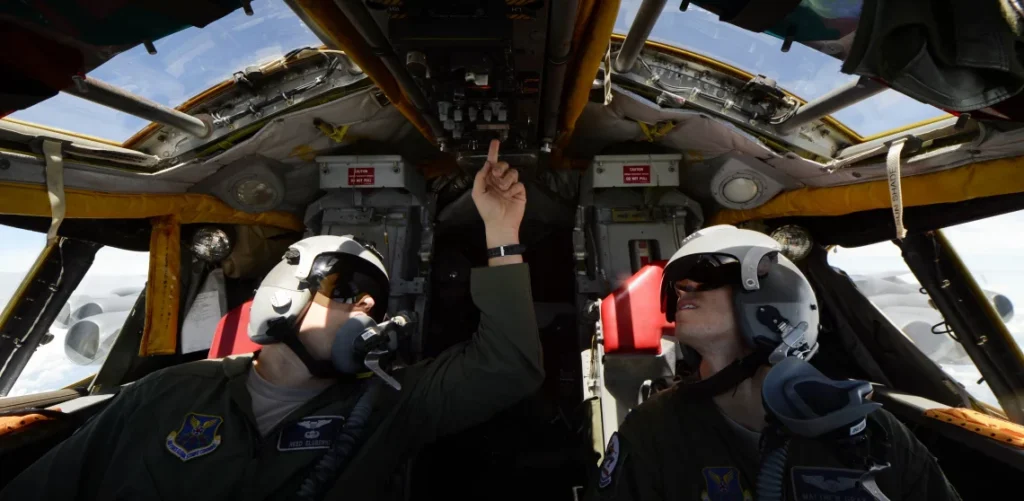
Feature Image: B-52 cockpit during flight. (U.S. Air Force)
Read more from Sandboxx News
- How B-52 Bombers shot down enemy fighter jets in Vietnam
- How Aviation Week beat Air Force security to steal pics of the stealth bomber
- What happens if you get hurt during basic training?
- The Air Force wants to accelerate the development of autonomous technology for its fleet
- Air Force awards Rolls-Royce B-52H engine contract