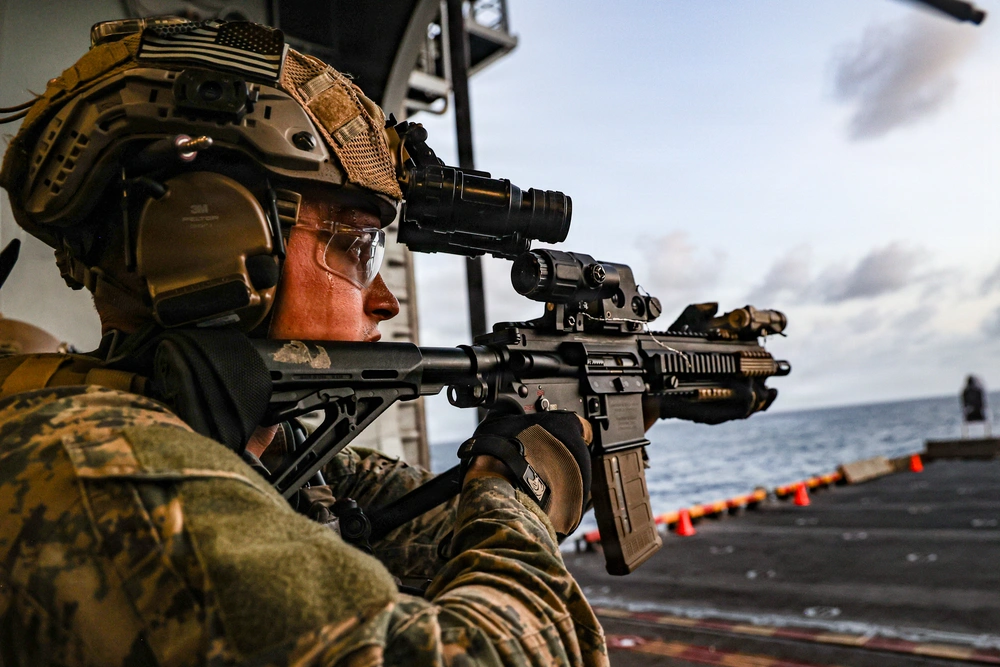
The use of suppressors in the military has expanded rapidly: what used to be the devices for special operations forces are now being used by the general infantry. And there’s good reason for that: Suppressors improve communication; situational awareness; and can even reduce recoil and muzzle rise.
While suppressors existed even before World War I, Vietnam was the proving ground for new ideas. Given the nature of jungle warfare, camouflage was invaluable which increased the need for suppressed weapons.
During the war, the military experimented with internally suppressed ammunition – an idea that ultimately failed. A company called AAI was crucial in developing them, while the Army’s Land Warfare Laboratory also manufactured one of its own.
How to silence a round
Two sources produce noise when firing a projectile: the explosion, which is created when burning gas escapes at the end of the barrel; and the supersonic crack, which occurs when the round hits supersonic speed. Creating subsonic ammo, to cancel the second source of noise, is easy; however, suppressing the explosion’s boom isn’t.
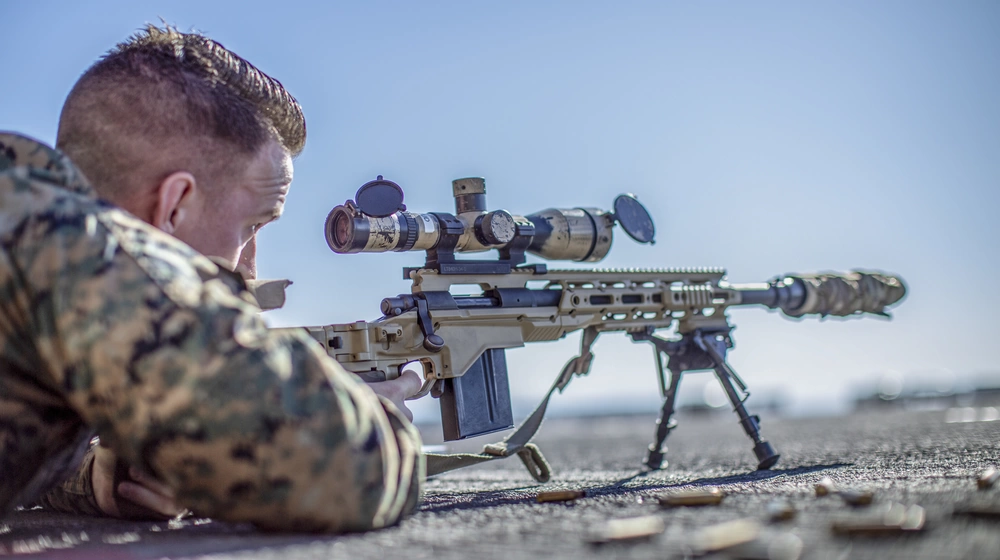
Two methods were developed during the Vietnam War tried to suppress the boom inside the case and create what are known as “internally suppressed cartridges.”
The first method used a captive piston. These piston systems sit inside the case and, in the down position, sit over the gunpowder. When the primer ignites the powder, the gas created by the powder propels the piston forward. The piston then strikes the projectile, transferring energy and launching it down the barrel.
The second method was similar. It used rounds that traded the piston for a gas-sealed actuator that was essentially a flexible aluminum foil balloon. This balloon sat over the gunpowder and when the primer ignited the gunpowder, the powder created gas, filled the balloon which then propelled the projectile forward.
The .30 XM76
The .30 caliber XM76 cartridge was developed initially with the .30-06 cartridge and used the captive piston method to launch quiet .30 caliber rounds. The XM76 fell under the Whisper Program that aimed to create a silent rifle – to eliminate sentries and snipe at close ranges – that didn’t need a forward suppressor.
The projectile weighed 85-grains, and moved at about 800 feet per second. This made it subsonic, but limited its range. Test reports stated that the loudest part of the gun was the clack of the rifle’s action slamming back and forth.
The downsides were numerous. This was basically a heavy .32 ACP round fired from an M1 Garand which translated to 50 to maybe 100 yards of effective ballistics. Further, it was inefficient, since you could develop a .32 ACP rifle with a suppressor and have a lighter, handier platform. Additionally, the rounds remained pressurized after firing due to the trapped gasses which could lead to ruptures and mini-explosions.
These cartridges were also expensive to produce, and ultimately, the juice wasn’t worth the squeeze.
Related: These are 6 of the weirdest suppressed weapons of Vietnam
The Quiet Special Purpose Revolver
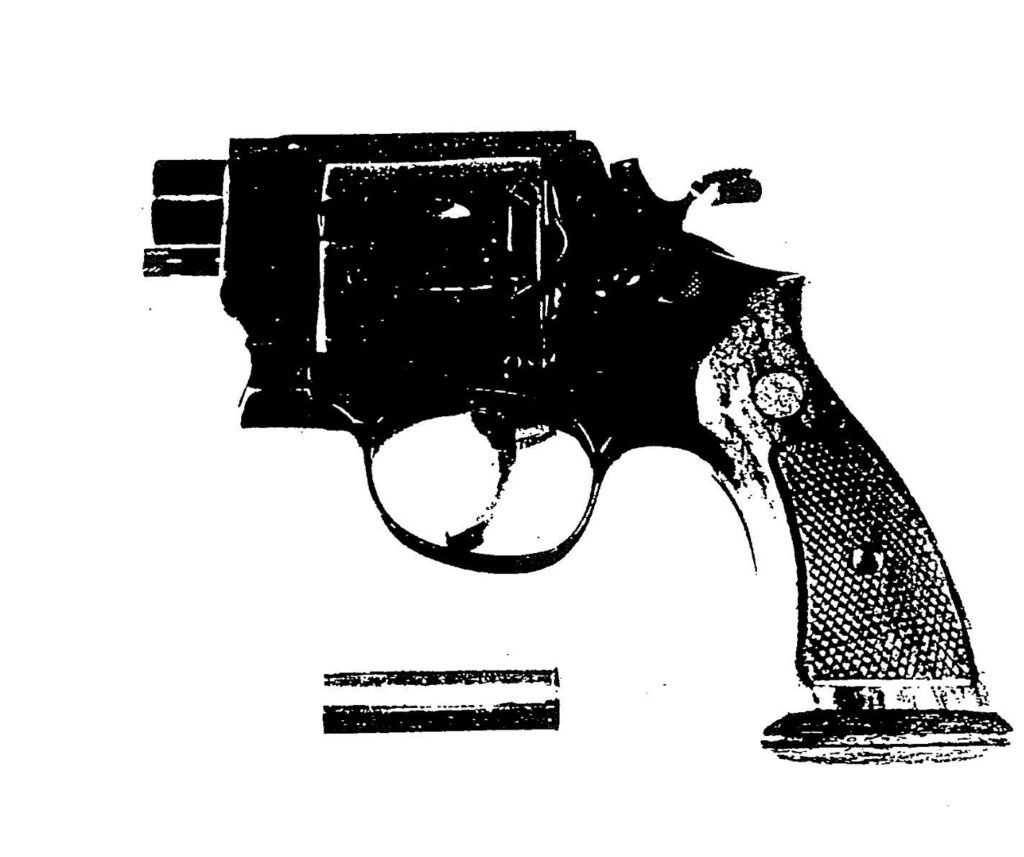
The most successful of all the internally suppressed cartridges was the one used in the Quiet Special Purpose Revolver. The QSPR was a S&W Model 29 with the barrel cut down to just 1.3 inches to create an extremely short design. The gun no longer shot .44 Magnum, instead it fired a custom round that used the captive piston technology.
Instead of a single projectile, the round fired 15 small tungsten balls. These are very small, but the density of tungsten allowed them to be effective.
The weapon was developed for Tunnel Rats who were entering and fighting inside enemy tunnels. The spread of shot made it effective in the dark and in odd positions when aim was compromised.
These guns were issued, and according to an After Action Report, an Army Ranger patrol used one to effectively engage the enemy above ground. In terms of how quiet it was, the reported volume was 110 dB, or roughly that of a suppressed .22LR.
AAI’s Silent Shotgun shell
The Navy put out a request for a silent shotgun shell. AAI responded by adopting its telescoping ammo design to a shotgun shell. The shell was all metal and extremely strong. Internally, this system used the gas-actuated design with the aforementioned aluminum foil balloon.
This system seemed better suited to the nature of shotguns and how the pellets stack within the shell. The AAI Silent Shotgun cartridge used a reduced load of No. 4 buckshot because there was less room inside the shell. At the same time, using No. 4 allowed for a decent payload of pellets, and the smaller pellets could reach a higher speed with less powder.
When fired, the balloon inflated and launched those pellets downrange at around 450 feet per second; this is not very fast for a gunshot and most buckshot moves at three times that speed.
From doccuments on the Texas Tech Vietnam Archive, it appeared the rounds had lousy range and penetration. They could also cycle semi-autos and would occasionally have difficulty ejecting from pump shotguns. Nevertheless, according to SEAL historian Kevin Dockery, the shotgun was so silent you could hear the firing pin.
Related: How the Vietnam War changed the Navy SEALs forever
The grenades
AAI also developed two “silenced” grenade systems. Obviously, silencing an explosive device isn’t possible, so the company tried to eliminate the smoke and flash of a grenade’s explosion instead.
The first was the M463 Smokeless/Flahsless grenade. This 40mm grenade used the captive piston technology to launch an explosive warhead at about 250 feet per second.
The round worked, but was expensive, offered very limited range, and simply never got very far beyond the testing phase. Plus, the pressurized case was still an issue and a 40mm case is a bit larger than a .30-06 or revolver cartridge.
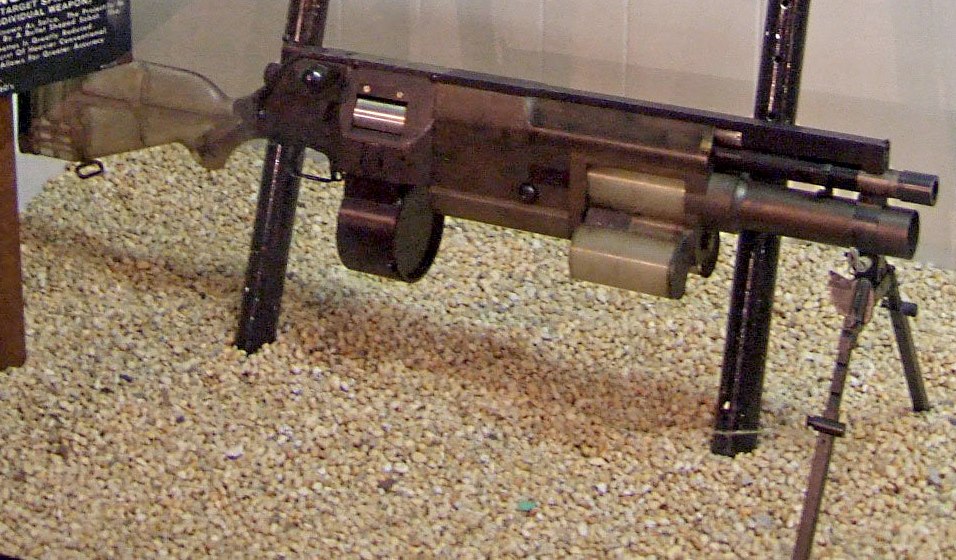
The second option was called the Disposable Barrel and Case Area Target Ammunition, or DBCATA. This disposable, self-contained single-shot 40mm grenade launcher also functioned as a grenade. The pre-rifled aluminum tube held the 40mm grenade and a gas actuated accordion-style piston launched it while keeping things silent.
The downside was that you’d have to carry as many launchers as you needed grenades which is a lot of bulk and weight. Further, the expensive launcher made it a pricey design. Additionally, the launchers remained pressurized after launching the round.
While the United States effectively stopped experimenting with these systems in the 1960s and 70s, Russia has made use of similar designs. As of now, any internally suppressed ammo projects of the U.S. military are either terminated or classified.
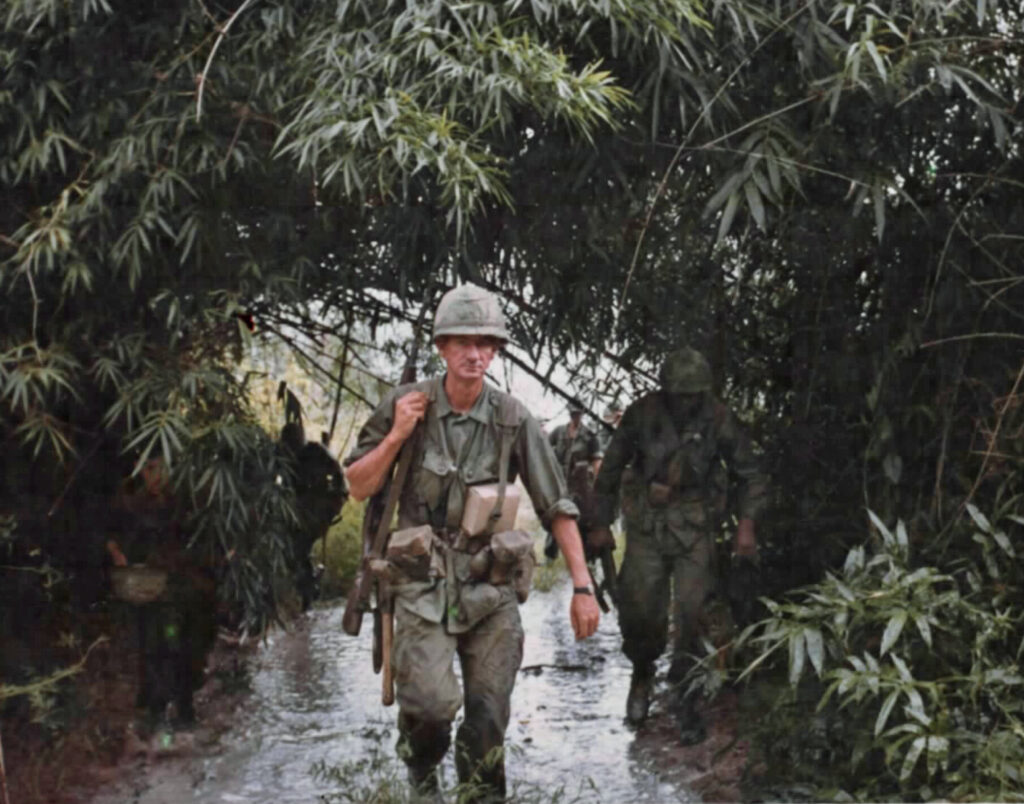
Feature Image: On 7th August 1965 elements of the 1st Inf Division conducted a three day search and destroy operation near Bien Hoa RVN where two companies of VC were reported to have been located. SGT William H. McMullen B Company, 1st Battalion, 16th Infantry, 2nd Bde, 1st Inf Div wades out of Jung-Le area during the search and destroy operation. (Photo by SSG Lyle V. Boggess/U.S. Army)
Read more from Sandboxx News
- 22nd Marine Expeditionary Unit will be first Marine formation to get attack drones
- Military tests high-tech ways to ensure troops on the frontlines are fed
- The military’s drone-defense confusion is leaving its bases vulnerable, Pentagon watchdog finds
- Lockheed Martin delivered record number of F-35s in 2025
- Air Force uses MH-139 Grey Wolf helicopters for the first time to protect nukes