For the first time in modern history, an American nuclear-powered attack submarine engaged and sank an enemy warship on the open ocean.
According to reports, on Tuesday, a U.S. Navy fast attack submarine engaged an Iranian Moudge class Frigate, the IRIS Dena, using a Mk 48 heavy torpedo – which is known to be among the most devastating anti-ship weapons in the U.S. arsenal – off the coast of Sri Lanka.
Infrared footage of the engagement, recorded from the submarine’s periscope, shows a massive explosion ripping through the aft section of the nearly 312-foot-long warship. The Dena, which is considered a destroyer by the Islamic Republic of Iran Navy, is one of just two ships of its class in service today; these vessels are considered the largest surface combatants in the Iranian Navy (ranked only behind floating bases and drone carriers).
The Dena was armed with naval guns, close-in-weapon systems, cannons and heavy machine guns, surface-to-air missile launchers, and 324mm torpedoes. It was built to conduct anti-ship, surface-to-air, and anti-submarine combat operations.
The engagement occurred more than 2,000 miles from Iran, in the international waters of the Indian Ocean. The Iranian warship had participated in international Navy exercises near India over the past month and was making its way back to the Middle East when it was sunk.
This engagement marks the first time an American submarine has sunk an enemy vessel since World War II, and the first time any country’s sub has taken down an enemy warship since the early 1980s.
Sri Lanka Navy authorities reported responding to an Iranian distress call at 5:08 a.m. local time, and rescue efforts commenced shortly afterward. A total of 79 Iranian sailors had been rescued at the time of reporting, with as many as 101 still believed to be missing; 32 of the recovered sailors are said to be hospitalized.
According to Chairman of the Joint Chiefs of Staff General Dan Caine, the Dena was the 21st ship of the Iranian navy to be sunk since offensive operations against the country kicked off on Saturday morning. The U.S. has effectively “neutralized” Iran’s major naval presence in the theater, Caine added.
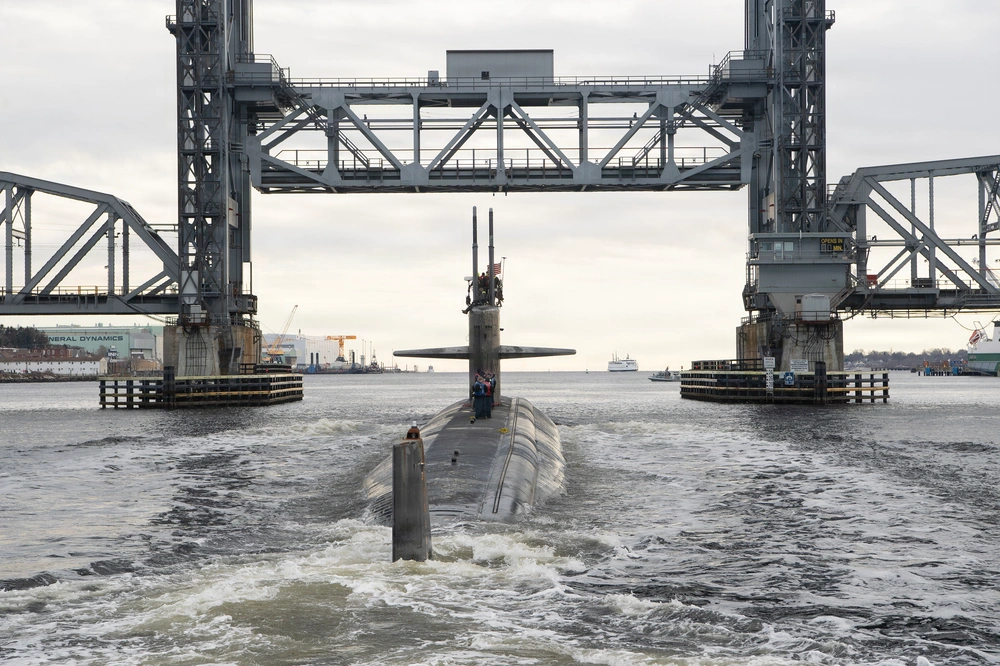
The Mk 48 heavyweight torpedo is the preferred weapon of choice for American submarines for engaging enemy subs and surface vessels. The original Mk 48s reached service in 1972, but they have seen substantial upgrades and updates since then. At roughly 3,695 pounds and stretching about 19 feet (5.8 meters) long, these weapons carry a massive 647-pound high-explosive warhead that detonates next to the hull of the target ship below the waterline. With a reported range of 25 nautical miles (or 29 miles), and an estimated top speed of 55 knots (roughly 63 miles per hour), these weapons are capable of hunting down and sinking just about any target on or below the surface of the ocean.
The U.S. Navy operates three types of fast attack submarines, and it’s currently not clear which type torpedoed the Dena. The most modern and advanced of the three types are the 24 commissioned Virginia-class attack subs that first entered service in 2004 and have seen substantial upgrades in subsequent production batches. The Navy also operates three Seawolf-class attack submarines built at the peak of the Cold War with little concern over cost. To some extent, you could liken the Seawolf to the U.S. Air Force’s F-22 Raptor, in that it was designed and built to provide a massive technological overmatch against a well-funded adversary, only to see its production run ended after just three subs were built after that adversary, the Soviet Union, collapsed.
And finally, the U.S. Navy still has around two dozen Los Angeles-class attack subs in service, representing the elder statesmen of the American attack submarines. These ships have been on duty since 1976 and thanks to steady upgrades over the years, remain among the most potent hunters on the open ocean today.
Feature Image: The last moments of the Dena seen from the American submarine’s periscope. (Osinttechnical X via U.S. Navy)
Read more from Sandboxx News
- F-35 gets its first ever air-to-air kill against a manned aircraft
- A Delta Force parachute saga
- France to send Charles de Gaulle aircraft carrier to the Mediterranean in response to ‘unstable situation’
- B-1 Lancers and B-2 Spirits are operating against Iran suggesting US has achieved air superiority
- 3 initial lessons learned from Operation Epic Fury against Iran