The U.S. Air Force is ready to move out of the testing stage and begin fielding operational AI-piloted drone fighters next year, based on the Air Force’s new 2026 budget request.
As part of the Pentagon’s massive budget request for 2026, the Air Force is looking for $1 billion in procurement funding for Collaborative Combat Aircraft, or CCAs, as the AI-piloted drone fighters currently in testing are called.
An additional $822 million has already been bookmarked for Collaborative Combat Aircraft Mods, meaning system upgrades and added capabilities, and another $1.4 billion for CCA development.
The Air Force intends to field a variety of different AI-enabled fighter drones to serve in different roles, ranging from the air-to-air-focused Increment 1 drones in testing today, to electronic warfare, air-to-ground operations, intelligence, surveillance and reconnaissance and more down the line.
The Air Force has stated that it plans to purchase at least 1,000 CCA fighter drones. It will start flying them operationally alongside upgraded F-22 Raptors first before joining new Block 4 F-35s and, sometime in the early 2030s, Boeing’s new F-47.
While there’s a long list of CCA drone fighter designs in development and testing for the Air Force, there are currently only two platforms in direct competition for what is likely to be the first serial production contract for drone wingmen ever executed.
The first to see a production-representative prototype take flight was General Atomics, with its YFQ-42 Dark Merlin. There are currently a handful of these drones in operational testing, though this program also saw the first crash of the CCA testing program, with a Dark Merlin going down shortly after take–off just a few days ago.
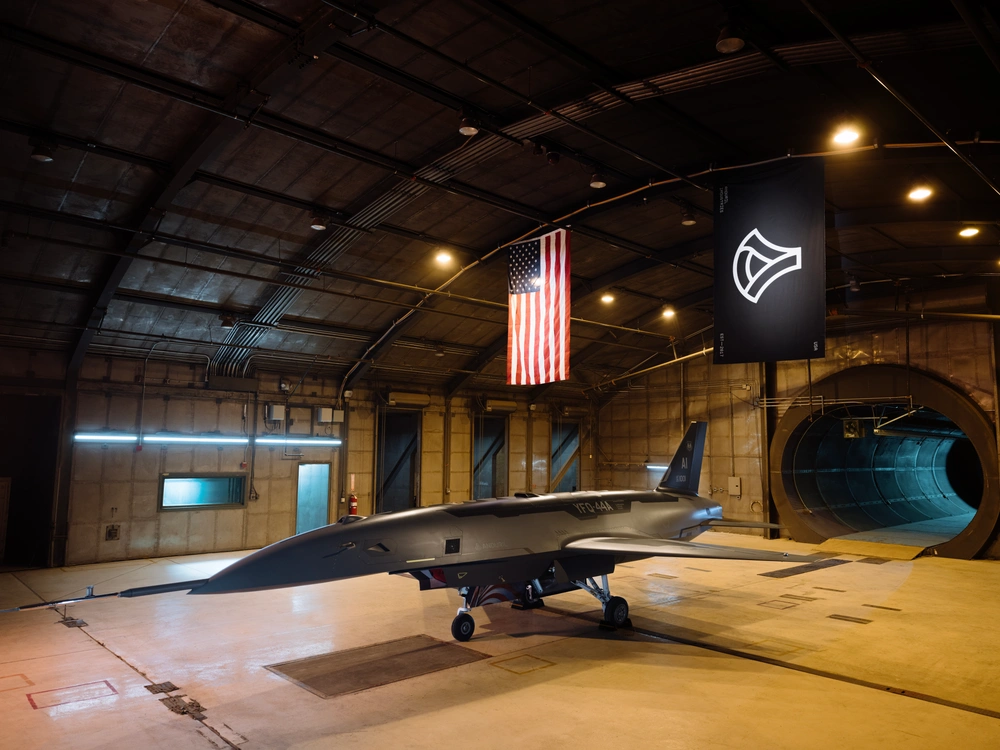
The other drone fighter competing for that billion-dollar funding is Anduril’s YFQ-44 Fury, which began development as an aggressor drone meant to simulate the characteristics of top-tier adversary fighters like China’s J-20 and Russia’s Su-57. Anduril purchased the firm that designed Fury and shifted its focus away from acting like enemy fighters, and toward shooting them down instead.
The Air Force has been clear that it may not choose one outright winner, and, instead, place orders for some number of each of these two CCA drones. The drones are expected to cost under $25 million per airframe, but actual costs have not been released.
Interestingly, both Anduril and General Atomics have already started low-rate initial production of their respective fighter drones. This may suggest that they both expect to win a share of the Air Force’s procurement budget, or they could be building more aircraft in anticipation of other contracts to come.
Tellingly, the Navy and Marine Corps are looking to field AI-piloted fighter drones of their own, as are several allied countries.
Feature Image: A YFQ-44A production representative test vehicle is staged in a testing chamber at Costa Mesa, CA. (Anduril)
Read more from Sandboxx News
- Northrop Grumman’s Talon fighter drone has a good chance of joining Air Force’s CCA program
- Anthropic tries to curtail the looming cybersecurity threat of its Mythos AI
- How a teenager with a Cessna helped topple the Soviet Union
- Marine Corps starts embracing red dot optics for handguns
- The little-known Pentagon agency behind the rescue of the F-15 crew in Iran