Modern warfare doesn’t feature much hand-to-hand combat, but that doesn’t mean it never happens. Corporal Robert Mitchell killed an insurgent with a KA-BAR during the horrific Hellhouse incident, and Sergeant Cliff Woodridge killed a Taliban fighter in Afghanistan by beating him to death with his machine gun. These rare occurrences show that regardless of how technologically advanced we get, warfare can still resort to the days of cavemen.
However, unlike cavemen, American Soldiers, Sailors, Airmen, and Marines are trained in hand-to-hand combat. While not a training focus, hand-to-hand combat still a formal training event, providing troops with basic self-defense skills without a firearm. And in one form or another, such training has been taking place since the U.S. military’s birth.
From 1776 to 1852
From the start of our nation until 1852, there was no formal manual for unarmed combat. Soldiers were likely trained in how to effectively use a bayonet as a fighting force rather than as individuals. We know that officers, cavalry, and others wielded swords, so some form of sword training is very likely.
Basic hand-to-hand training was unlikely and there wasn’t a major focus on martial arts outside of the sword and bayonet. While it might have been wise for a soldier to be handy with a knife and know a little wrestling, those skills would likely have come from outside their military service.
Wrestling was a popular pastime in Colonial America. Settlements would have their champions, and both Colonial Americans and Native Americans were known to wrestle together. Greco-Roman Wrestling, Catch Wrestling, and collar-and-elbow wrestling were common.
The 1852 manual
In 1852, the U.S. Army received its first formal manual for training soldiers in martial arts, when we translated a French bayonet manual. This manual was used to teach the basic fighting skills of most European forces and was largely standardized. Training became known as “bayonet fencing.”
Bayonet fencing would become a popular sport, even becoming part of the Olympics until the 1930s.
The 1852 manual, titled “Manual of Bayonet Exercise” is complete with thrusts, slashes, ripostes, and parries. The tactics used then aren’t all that different from bayonet tactics taught now.
World War I
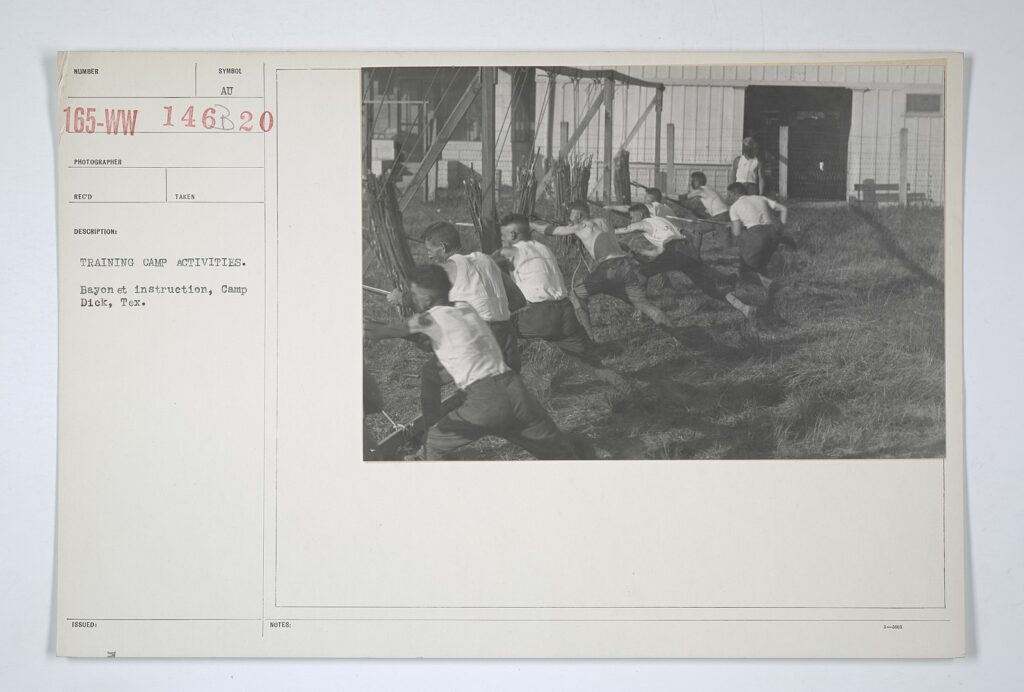
Bayonet fighting was the premier European martial art before the Great Wasr. That all changed in the trenches.
The close-quarter nature of trench combat made bayonet use extremely difficult. Soldiers turned to knives, clubs, and a variety of homemade tools to fight the enemy. American forces even created the famed trench knife, complete with a thin, dagger-like blade and a set of knuckle dusters.
American hand-to-hand combat wasn’t a formalized system taught to every troop. However, American expeditions to the East introduced more formal martial arts to the American military. American troops adopted techniques from Judo and Jujitsu into their fighting skills. Yamashita Yoshitsugu, an extremely skilled Judo practitioner, even taught Judo at the U.S. Naval Academy for a time at the behest of Theodore Roosevelt.
A. E. Marriott developed a martial art for soldiers that blended Judo, Jujitsu, Boxing, Catch Wrestling, and more. In 1918, a private publication was released on the topic, but it was not a military manual.
Related: The weird and experimental aircraft guns of World War I
World War II
When World War II broke out, the need for hand-to-hand training became evident. The military wasn’t publishing manuals, but the U.S. Army would bring in wrestlers and boxers to teach Soldiers. However, this measure had limited effectiveness simply due to time constraints and the sheer number of men serving in the U.S. Army.
The United States did adopt techniques taught by Shanghai policemen William Fairbairn and Eric Sykes. The two men had trained British commandos and members of the First Special Service Force, an elite Americano-Canadian unit of WWII. Fairbairn and Sykes, trained in Judo, Wrestling, and Boxing and created a simple system for troops that famously emphasized dirty fighting.
The techniques included, among others, targeting the crotch and eyes, throwing dirt, and using knives. The system was designed to be violent, quick, and to ensure the user survived at any cost.
American Colonel Rex Applegate, who worked for the Office of Strategic Services and taught hand-to-hand combat to American commandos, was a disciple of the Fairbairn and Sykes programs.
Post-World War II
After World War II, there was no further emphasis on hand-to-hand fighting. Drill sergeants and instructors taught it, but it wasn’t a priority.
In 1950, General Curtis LeMay and the Air Force sent 13 personnel to Japan to study at the premier Judo school. These instructors would go on to create the Air Force Judo school, which would graduate thousands of instructors and introduce a fighting system for the Air Force.
A military manual was created in 1971 to establish a fighting system, but its practical focus was nonexistent.
The manual adopted some of the same techniques of the Fairbairn and Sykes program. It implemented bayonet fighting but had a hand-to-hand focus. Reading the manual reveals a focus on kicks to the crotch, improvised weapons, basic punches and kicks, and how to apply and escape holds. While it seemed fairly effective, there was still a lack of training.
Related: The profound influence of Judo in the American military
The modern era
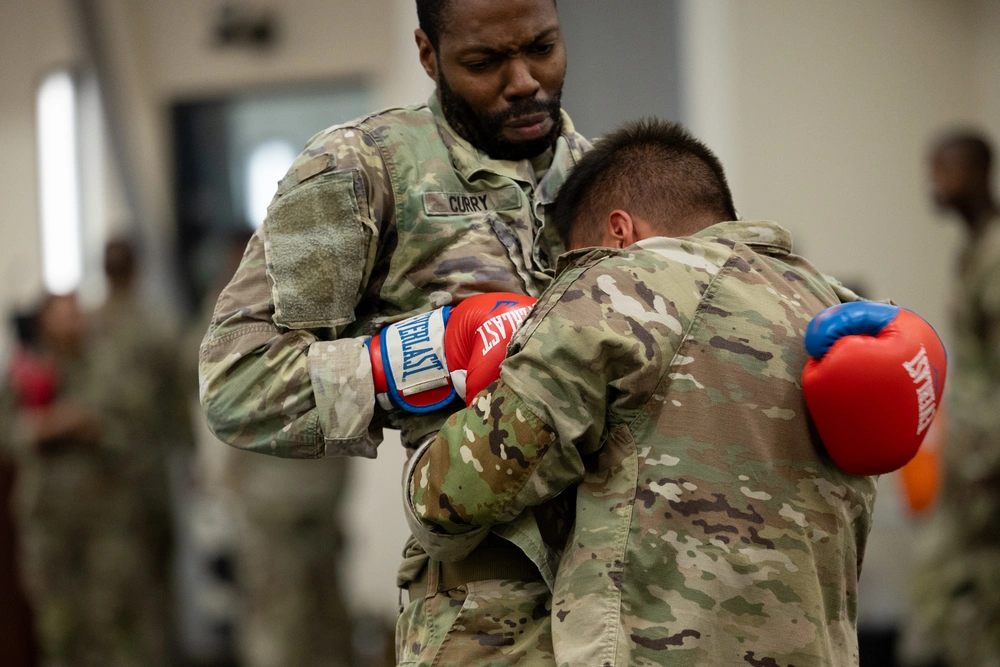
The American Marine Corps introduced the LINE System in 1988. This system blended techniques from Boxing, Wrestling, Judo, Jujitsu, Karate, and more. It focused on killing the enemy and causing as much pain as possible. The system was taught at boot camp and reinforced via training in the fleet. LINE expanded beyond the Marine Corps and was taught to units in the Army and Air Force.
The Marine Corps later discontinued LINE for MCMAP (Marine Corps Martial Arts Program), another hybrid martial art that integrated various techniques. MCMAP incorporated knife fighting, improvised weapons, garrotes, and more into the Marines’ training. MCMAP also focused on fighting while wearing body armor and helmets. It is still used to this day.
The Army looked outward and realized the capabilities of Brazilian Jiu-Jitsu. It sent Soldiers to train with the Gracie family, developers of Brazilian Jiu-Jitsu, and brought the Gracies in to train Soldiers. Jujitsu, as well as techniques tested and implemented by Matt Larsen – who founded the U.S. Army Combative School – would go on to become the Modern Army Combatives program that is used by the Big Army today.
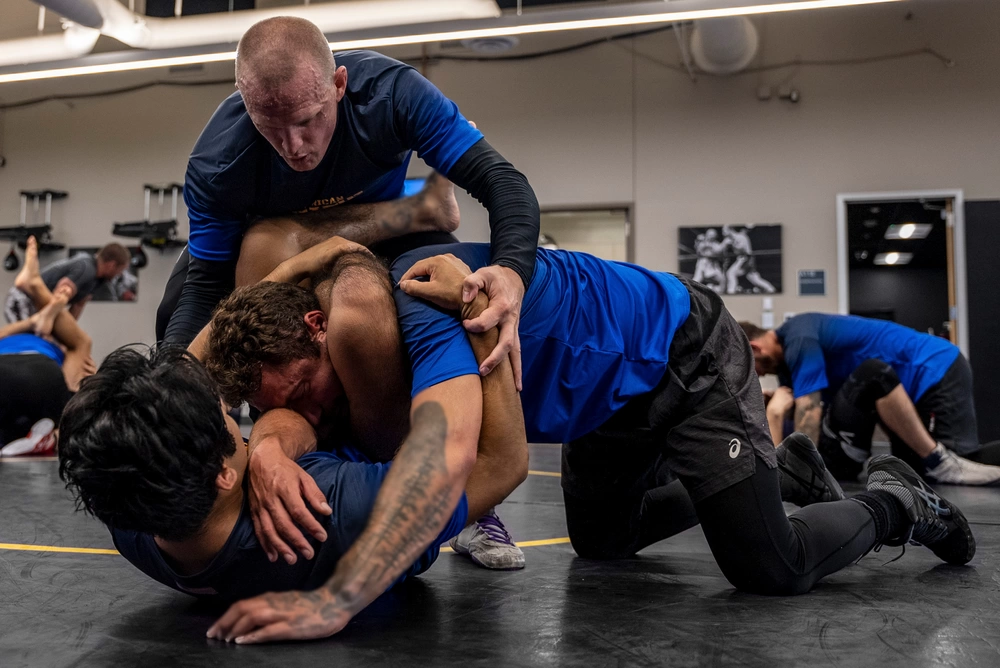
The Army’s Green Berets use the Special Operations Combatives Program (SOCP). Designed by Greg Thompson, a civilian, SOCP builds on the Army Combatives program. It’s a realistic training program designed to broaden a Soldier’s skills and teach them to use everything from their hands to their helmet to win a fight.
In 2009, the Air Force created the Combatives program. This focused on blended martial arts with Wrestling, Boxing, Jujitsu, and Judo, creating a series of core skills taught to Air Force personnel.
Navy Special Warfare Sailors (Navy SEALs and SWCC) utilize the Naval Special Warfare Combatives program. This is an MMA style martial art with a mix of Brazilian Ju Jitsu, Krav Maga, Boxing, and even Muay Thai. There is a focus on being able to use this martial art while wearing armor, and a special focus on weapon retention and detainee handling.
MCMAP, Air Force Combatives, SOCP, Naval Special Warfare Combatives program, and the Modern Army Combatives program are the current military martial arts taught to American forces. While hand-to-hand combat is rare, any such fight in a warzone ends in a winner and a dead loser. Additionally, martial arts can help teach discipline, promote physical fitness, and unlock controlled aggression in individuals practicing the techniques. Properly trained aggression will always be valuable to the United States military.
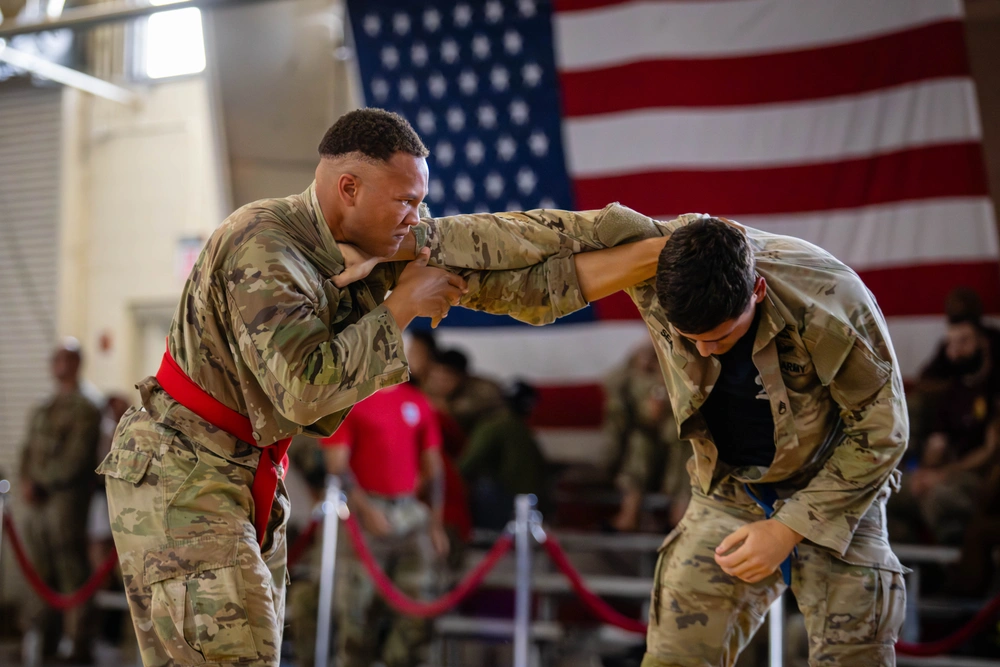
Feature Image: U.S. Army paratroopers assigned to the 82nd Airborne Division battle for position during a combatives match at the All American Week Tournament on Fort Bragg, NC, May 19, 2025. The tournament highlights the strength, determination, and warrior spirit of the All-American Division. (U.S. Army photo by Sgt. Nolan Brewer)