
RECEIVING WEEK
“THE YELLOW FOOTPRINTS”
Welcome to the beginning of military life at MCRD Parris Island, known as Receiving Week. This week is a real test of their strength and mindset, preparing them for the tough training ahead.
My name is SgtMaj Paul Davis (Ret) and I spent 27 years in the Marine Corps, including 7+ years in recruit training. I’m here to guide you through the exciting journey your Recruit is about to embark on at Marine Corps Boot Camp over the next 12 weeks. Follow me as we start with the arrival at Parris Island.
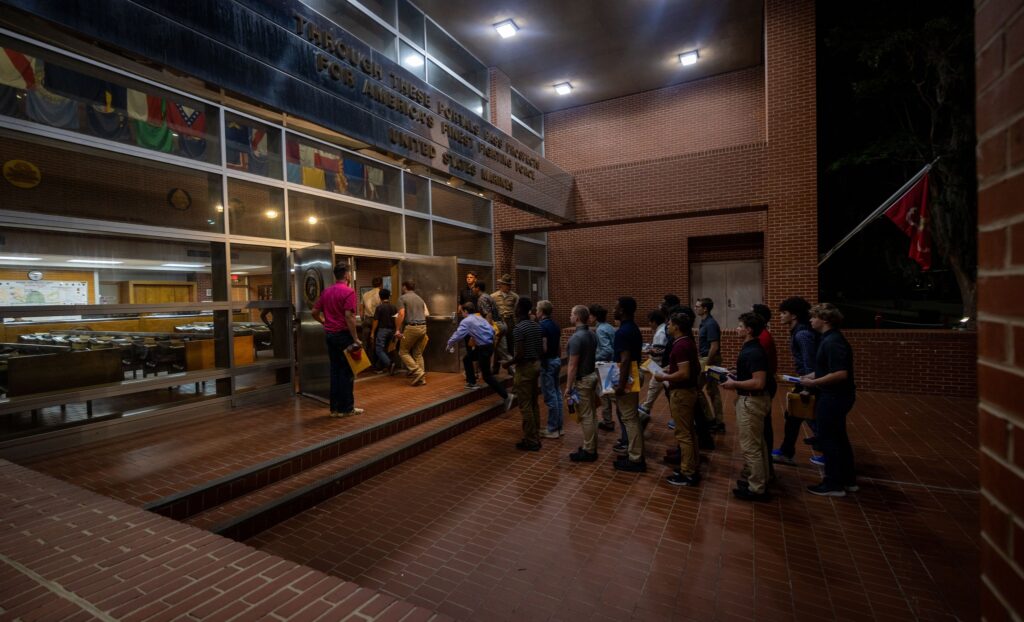
Receiving Week
Stepping off the bus, hearts pound, palms sweat, and breaths quicken as a wave of nervous excitement washes over Recruits. This is the shared experience of countless individuals who have crossed the threshold onto Parris Island. Here, drill instructors greet them, ushering them onto the legendary yellow footprints.
Standing on these hallowed markings, Recruits are briefed on essential topics: How to stand at the position of attention, the difference between civilian laws and the Uniform Code of Military Justice, what it means to be a Marine, and finally, how thousands of recruits have stood on those very same yellow footprints before them.
The new Recruits walk quickly toward two large silver hatches (doors). They will pass through these hatches one time and never again. As the silver hatches close behind them, a chapter of their lives closes, too, and a new chapter begins.
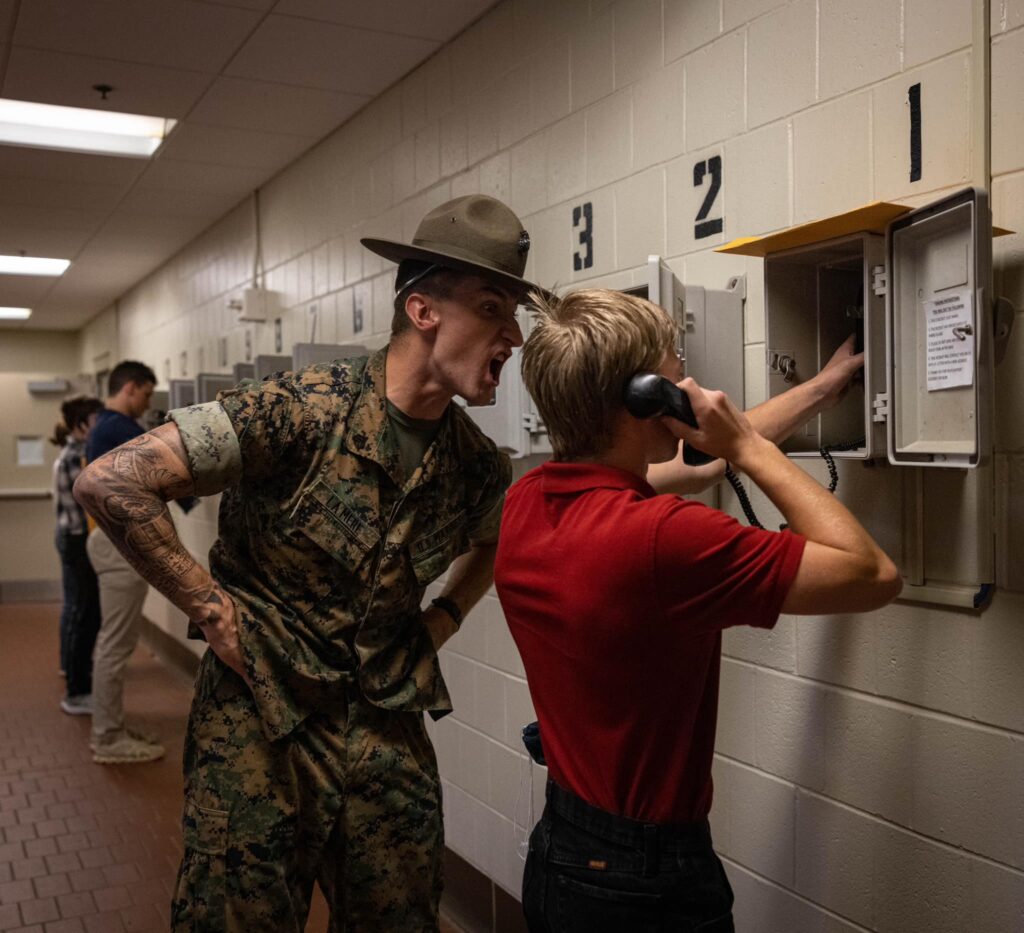
Herded from room to room, they’ll soon connect with loved ones back home, following a script that reinforces their commitment to the journey ahead. Other than MAIL, this phone call signifies their final contact with the outside world for the next three months. By the next communication with their families, they will emerge as transformed individuals—United States Marines.
The Transformation Begins
The first week is a whirlwind of adaptation and resilience. Recruits dive into the fundamentals of military life, navigating everything from precise uniform wear to the discipline of early mornings. They’ll complete paperwork, receive haircuts, uniforms, and gear, and undergo medical evaluations.
This week also introduces them to the core values that will guide their conduct throughout their service, shaping their character and instilling a deep sense of duty. It’s a test of mental fortitude and commitment. Receiving week culminates with meeting the team of drill instructors who will be with them literally every single minute of every day over the next 12 weeks.
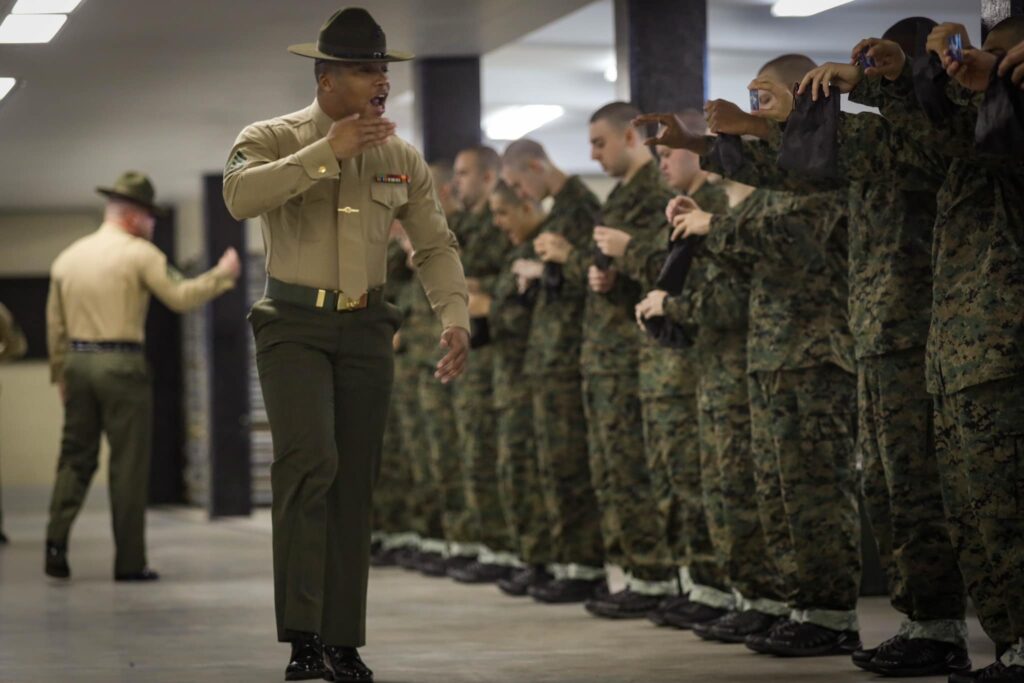
Building Endurance Beyond Limits
Training week one is a crucible, forging physical and mental strength in new Recruits. While building physical endurance is crucial, the experience goes far beyond. It’s an intense mental and emotional challenge, pushing them to master self-discipline and resilience in the face of stress and fatigue. This week lays the foundation for mental toughness that will match their physical capabilities.
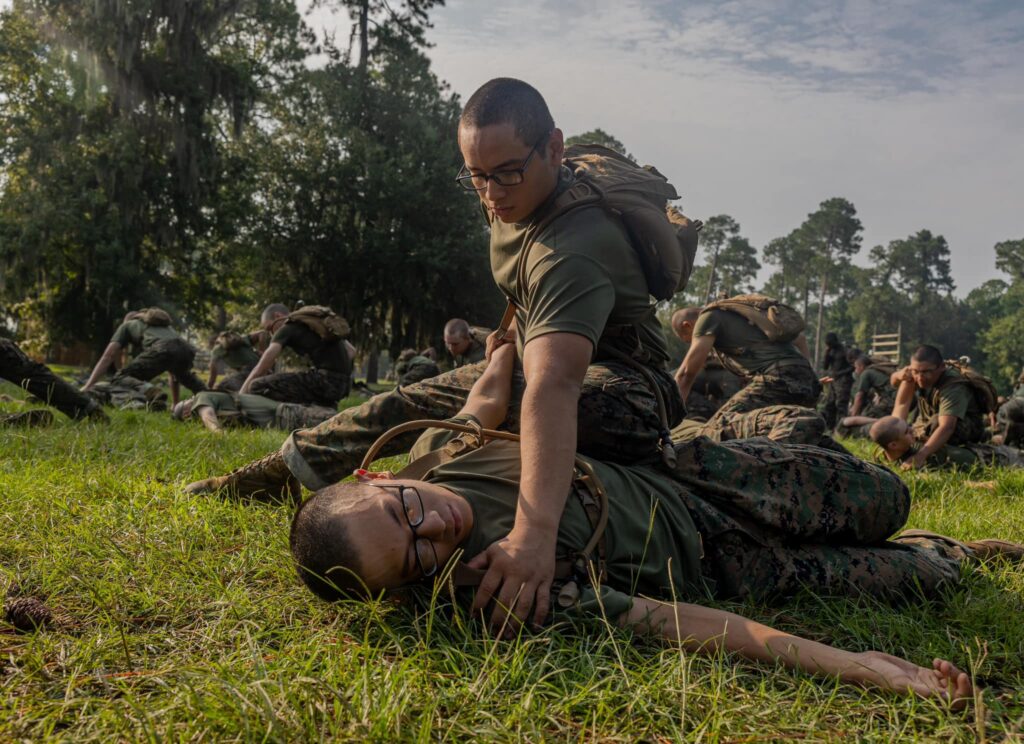
Through close-order drill, Recruits learn precise movements and teamwork, fostering a unified and disciplined unit. They dive into the Marine Corps Martial Arts Program (MCMAP), building basic combat skills and understanding self-defense principles.
Most importantly, they begin to internalize the core values that define the Marine Corps—Honor, Courage, and Commitment—becoming the cornerstone of their character and guiding their actions throughout their service. This first week is a demanding yet transformative experience, laying the groundwork for the Marines they will become.

Initial Strength Assessment (ISA): Setting the Foundation for Training
Culminating the first week of training is the Initial Strength Assessment (ISA), a critical test to evaluate each recruit’s baseline physical fitness. The ISA is designed to ensure that recruits meet the minimum fitness standards necessary to safely begin the rigorous training ahead. It includes three key components:
- Pull-Ups or Push-Ups: Testing upper body strength.
- Planks: Assessing core endurance.
- 1.5-Mile Run: Measuring cardiovascular endurance.
Recruits must achieve a minimum score in each area to demonstrate they are physically prepared for the demands of Marine Corps boot camp. The ISA not only sets a benchmark but also helps drill instructors tailor physical conditioning programs to improve recruits’ fitness over time.
Bridging the Gap With Letters
Amid the rigorous demands of the initial training phase at Parris Island, a letter from loved ones becomes a beacon of hope. This seemingly small act of sending a message carries immense weight, offering recruits a tangible link to the world they’ve temporarily left behind. It serves as a touching reminder of the support waiting for them, providing a crucial morale boost and a sense of comfort amidst their challenging journey. These letters are not just messages; they’re lifelines that uplift spirits and reinforce the resolve to persevere.
You’re on this journey WITH your recruit, and the best way to stay connected is by sending mail. Sandboxx Letters arrive on base the next day with return stationery, a pre-addressed envelope, the return postage paid, photos, and the option to add a gift card. If you’re unsure what to write, start with simple questions about their daily experiences or add the Daily Drive letter add-on for consistent support.
Over the next 12 weeks, I’ll share weekly updates about what your recruit is experiencing during their transformation into a Marine. This path is tough and demanding, but in the end, your recruit will have EARNED the title of United States Marine. Stay tuned for more insights and stories from this foundational phase of your recruit’s journey.
I’m SgtMaj Paul Davis (USMC Ret), and I can’t wait to share more with you about this incredible journey.
Semper Fidelis